


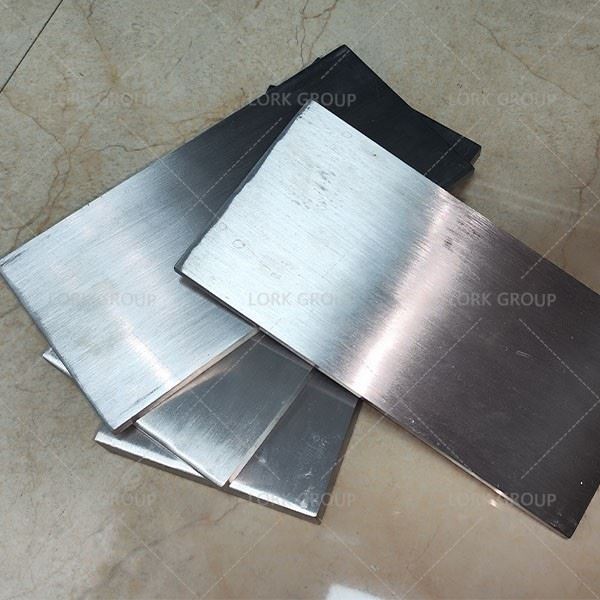

Stellite 6B Plate / Sheet(UNS R30016)
Products Description

Stellite 6B is a wrought cobalt-chromium-tungsten wear-resistant alloy sheet. Through hot rolling or hot forging, the coarse carbides in the as-cast microstructure are broken down and refined, enabling the material to retain excellent wear resistance while achieving toughness and impact resistance far superior to those of the as-cast alloy.
Key Performance Advantages (sheet Form)
Toughness approximately four times that of the as-cast state: Forging and rolling break up coarse carbide networks, making the material suitable for plate-like components subjected to impact loads.
Resistance to galling and scuffing: A low coefficient of friction allows for metal-on-metal contact without galling or material transfer, even in unlubricated conditions; ideal for sliding components such as bushings and liners.
Outstanding red hardness: Hardness is approximately 226 HB at 540°C and remains around 102 HB at 870°C, with the material recovering its original hardness upon cooling.
Excellent resistance to cavitation and erosion: Its forged microstructure yields wear resistance comparable to harder cast materials; steam turbine blade shields made from this material have remained in continuous service for over 30 years.
Implementation Standards and Common Specifications
AMS 5894 Aerospace Material Specification covering plate, sheet, and bar; the most common procurement standard for Grade 6B.
UNS R30016 Unified Numbering System designation for wrought Grade 6B (R30006 corresponds to the cast form).
Stellite 6B plate is most commonly available on the market in thin and medium-to-heavy gauges, with standard stock thicknesses ranging from 0.031″ to 1.0″ (approximately 0.8 mm – 25.4 mm).
For applications in the aerospace sector or scenarios requiring precision wear resistance, standard thin sheets and medium-to-thick plates ranging from 0.8 mm to 25.4 mm represent the forms with the highest circulation volume.
Note: The above information is for reference only; please contact us for dimensions and pricing.
📧 layla@lorkgroup.com | 📞 +86 199 3707 5488
chemical composition
| Co | Balance |
| Cr | 28.0-32.0 |
| W | 3.5-5.5 |
| C | 0.90-1.40 |
| Ni | ≤ 3.0 |
| Fe | ≤ 3.0 |
| Si | ≤ 2.0 |
| Mn | ≤ 2.0 |
| Mo | ≤ 1.5 |
The carbon content of 6B (0.9–1.4%) is lower than that of Stellite 3 (approximately 2.3%); however, hot forging or hot rolling breaks up the carbide network into a dispersed distribution, achieving toughness far superior to the as-cast state (with elongation reaching 8–15%) while maintaining a hardness of HRC 33–43.
Physical properties
| Tensile strength | ≥ 896 MPa (130 ksi) Approx. 1000–1060 MPa |
| Yield strength (0.2%) | ≥ 483 MPa (70 ksi) Approx. 605–640 MPa |
| Elongation (4D) | ≥ 5% Approx. 7–17% (depending on thickness) |
| Reduction of area | ≥ 7% |
| Hardness | HRC 33–43 |
Mechanical properties
| Tensile strength | ≥ 896 MPa (130 ksi) |
| Yield strength (0.2%) | ≥ 483 MPa (70 ksi) |
| Elongation (4D) | ≥ 5% Approx. 7–15% |
| Reduction of area | ≥ 7% |
| Hardness | HRC 33–43 |
Typical Tensile Data for Different Thicknesses
There are differences in typical properties between thin sheets and medium-to-thick plates:
| Form | Temperature | Tensile Strength | Yield Strength | Elongation |
| 1.6 mm Thin Sheet | Room Temperature | 1007 MPa | 632 MPa | 11% |
| 12.7 mm Medium-to-Thick Plate | Room Temperature | 1020 MPa | 607 MPa | 7% |
Processing of Stellite 6B sheet/Plate
The primary challenges stem from the material's high hardness, high wear resistance, and significant tendency toward work hardening. Key processing guidelines for the plate form are as follows:
Heat Treatment: Supplied in the solution-annealed condition. Optional aging at 816°C for 3 hours increases hardness by 2–4 HRC but reduces toughness.
Machining: Carbide tools only; high-flow coolant is mandatory. Threading should be performed via EDM or grinding.
Grinding: The preferred method for finishing; use aluminum oxide grinding wheels. Water quenching is strictly prohibited.
Welding: Preheat to ≥538°C; air-cool after welding; rapid cooling is prohibited. Use Stellite 6 or 6B filler materials for autogenous or similar welding.
Note: Perform rough machining in the solution-annealed state to minimize the amount of machining required after heat treatment.
Lork Group
Marketing Operations Department
Hot Tags: Stellite 6B Sheet, UNS R30016, AMS 5894, Wrought Cobalt Alloy, Wear Plate & Liner, Stellite 6B valve seat
You Might Also Like


Send Inquiry