Your Professional Machined Parts Supplier


Lork Group specializes in supplying machined parts in five materials: nickel alloy, cobalt alloy, titanium alloy, precision alloy, and stainless steel. We maintain inventory standards in accordance with ASTM, AISI, AMS, JIS, GB, and other relevant standards. These machined parts are commonly used in aerospace, medical, and industrial applications. With custom lengths available. Most importantly, we support third-party testing and have extensive customer experience verifying our machined parts, ensuring peace of mind in your selection and reliable delivery.

  • Nitinol Medical Alloy Wire

    Our specially supplied medical-grade nickel-titanium alloy is a precision smart material commonly used in orthodontic archwires, eyeglass frames, cardiovascular stents, minimally invasive surgical

  • Inconel 718 Nickel Alloy Mold

    Inconel 718 is a nickel alloy with unparalleled strength, stability, and durability under extreme environments (high temperature, high pressure, strong corrosion). If your mold working conditions are

  • Vicalloy Wire(W.Nr. 2.4713,UNS K92839 / K92841)

    It is the malleable talent among permanent magnet materials; unlike Neodymium-Iron-Boron—which is hard, brittle, and can only be ground—it can be drawn into wire, rolled into strips, and stamped into

  • CMSX‑4 Alloy Medical - Single-Crystal Superalloy -Lork Group

    CMSX-4 is a top performer material specifically engineered for extreme operating conditions—a context that typically refers to the hot-section components of gas turbines, such as turbine blades and

  • AMS 5872 Haynes 263 Nickel Alloy

    Haynes C 263 is a nickel-cobalt-chromium alloy. This AMS 5872 Haynes 263 nickel alloy is an aerospace-grade superalloy. Lork Group typically supplies precipitation-hardened wire, rod, and strip for

  • 3J21 Elgiloy Alloy Wire

    Elgiloy is classified as a cobalt alloy and offers exceptional properties in terms of tensile strength, strength, ductility, and corrosion resistance. Key applications for Rocco's 3J21 material

  • Haynes 25 Cobalt Wire

    Haynes Alloy 25 is a solid solution strengthened cobalt-chromium-tungsten-nickel alloy with excellent oxidation resistance. Haynes Alloy 25 supplied by Lork Group has good forming characteristics and

  • AMS 5555 / UNS N02205 / Nickel 205 Wire

    Nickel 205 alloy contains small additions of aluminum and titanium for a good combination of mechanical and electrical properties. Contact Lrok Group today for Nickel 205 alloy specifications,

  • Premium Inconel 600 Spring Manufacturer

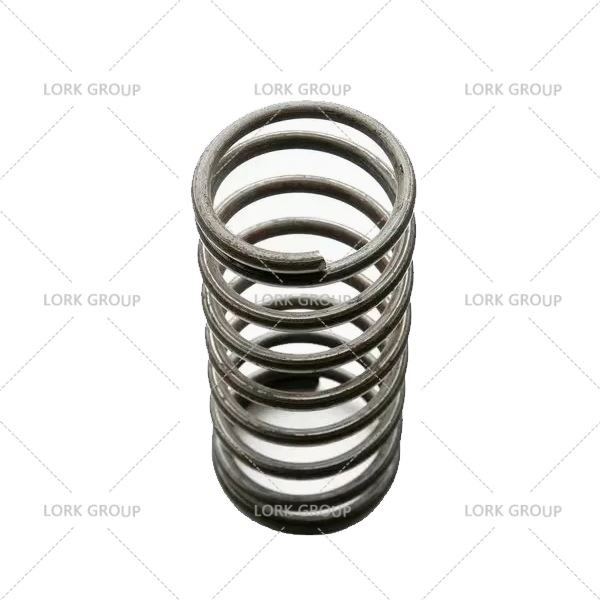
    Inconel 600 is a nickel-chromium alloy spring wire known for its exceptional corrosion resistance, high strength, and reliability in extreme temperatures up to 700°F (370°C). Contact us today for a

  • Factory Custom Inconel 718 High Temperature Alloy Springs

    Inconel 718 is a Nickel-Chromium alloy being precipitation hardenable and having high creep-rupture strength at high temperatures to about 700°C (1290°F). It can be used for any TSMC spring product

  • Hastelloy C276 Alloy Balls

    We supply high-quality Hastelloy C-276, B2, B3, C-22 balls for valves, pumps & aerospace. Corrosion-resistant, high strength, precise tolerances. Contact us for competitive pricing & global delivery!

  • Inconel 625 Alloy Balls

    An Inconel 625 ball would be used in applications requiring durability in harsh environments, such as aerospace, chemical processing, marine, and oil & gas industries.

First 12 Last


Machined Parts Specification


Property

Value

Rockwell Hardness B Scale

95

Density g/cm^3

8

Yield Tensile Strength KSI

37

Ultimate Tensile Strength KSI

82

Elongation% in 2 in.

52

Brinell Hardness 3000 kg load

210

Melting Point °F

2500 - 2550

Shear Strength KSI

58

Machinability %

36

Electrical Conductivity% IACS

2


Advantages of Ball

Corrosion Resistance

Ball is highly resistant to corrosion, making it ideal for use in medical devices that are frequently exposed to bodily fluids and sterilization processes. This resistance ensures longevity and reliability, reducing the risk of device failure.


Biocompatibility

Ball is biocompatible, meaning it does not cause adverse reactions when in contact with human tissue. This property is crucial for implants and other devices that remain inside the body for extended periods.


Strength and Durability

Balls possess high tensile strength and can withstand significant stress and pressure. This durability is essential for the functionality and safety of medical devices, ensuring they perform consistently under various conditions.


Precision and Smoothness

The manufacturing process of balls ensures a high degree of precision and a smooth surface finish. These characteristics are vital for the accurate and reliable operation of medical devices, minimizing friction and wear.


Easy Sterilization

Ball can be easily sterilized using various methods, including autoclaving, chemical sterilization, and radiation. This versatility ensures that medical devices maintain their sterility and safety standards, crucial for patient care.

316/316L Stainless Steel Balls


Machined Parts Size and Precision Grades


Size Range (Diameter)

Typical Applications

Precision Grade

Tolerance Example (10 mm Ball)

0.2–25.4 mm

Precision bearings, instruments

Grade 3

±0.08 μm

0.2–25.4 mm

High-quality bearings, automotive

Grade 5

±0.13 μm

0.2–50 mm

General industrial applications

Grade 10

±0.25 μm

25–150 mm

Heavy-duty industrial equipment

Grade 16+

±0.5 μm or above


Applications of Machined Parts

Inconel 718 Nickel Alloy Mold
AMS 5829 Nimonic 90 Nickel Alloy
Hastelloy C276 Alloy Balls
ASTM B575 Hastelloy G-35 Nickel Alloy

Bearings

Balls are commonly used in bearings for industries like food processing, medical devices, and marine equipment. Their corrosion resistance ensures smooth operation and long-lasting durability in these environments.


Valves and Pumps

In valve and pump applications, balls are essential for managing the flow of corrosive fluids or operating in challenging environments where rust is a concern.


Medical and Laboratory Equipment

Balls are used in medical devices, surgical instruments, and laboratory equipment due to their biocompatibility, corrosion resistance, and ease of cleaning.


Aerospace and Defense

The aerospace and defense industries use balls in aerospace components, satellite systems, and defense equipment due to their high-performance properties, such as corrosion resistance and durability.


Food and Beverage Industry

In the food and beverage industry, balls are used in processing equipment, mixers, and conveyors where hygiene and corrosion resistance are critical.


Automotive Industry

Balls are applied in automotive fuel systems, exhaust systems, and specialty bearings, providing both durability and resistance to corrosion.


Cosmetics Industry

Balls are used in the cosmetics industry, such as in lip balm dispensers and mixing mechanisms, helping to ensure product consistency.


Jewelry

Some high-end jewelry and watch components use balls for their durability and corrosion resistance, ensuring long-lasting performance.


Chemical Processing

In the chemical processing industry, balls are essential for reactors, mixers, and equipment that handles corrosive chemicals.


Sprayers and Dispensers

Balls are used in sprayers, dispensers, and aerosol cans to assist in even distributing liquids or gases, providing reliable performance.


Machined Parts Specification


Technical Specification

Inconel 718

Nominal Composition

Ni:50.0 - 55.0
Cr: 17.0 - 21.0

Cb(Nb): 4.75 - 5.5

Mo: 2.8 - 3.3

Density

0.296 lb./in3, (8.19 g/cm3)

Modulus of Elasticity (E)

At 70°F (20°C):29.0 x 10³ ksi

Modulus of Rigidity (G)

At 70°F(20°C): 11.6x10³ ksi

Coefficient of Expansion

7.7 µin/in.-°F (70°F to 600°F)
13.9 µm/m-°C (20°C to 300°C)

Electrical Resistivity

47.5 µΩ.in, (121 µΩ.cm)

Thermal Conductivity

79 Btu-in/ft2hr-°F, (12.0 W/m-K)

Min Size

0.002 in (0.0500 mm)

Max Temp

650oC (1200oF)

Uses of Inconel 718 springs

It has good resistance to oxidation and corrosion at high temperatures. Hence used in atmospheres encountered in jet engines and gas turbine operations.


Premium Inconel 600 Spring Manufacturer


Spring Manufacturing Process

Spring Winding

Coiling: The technician operating the machine sets it up to prepare it for the specific type of coil being made and feeds the wire into a set of rollers, which pulls the spring wire toward a set of guides.

Forming: This is done using a spring former or CNC spring former machine.

Bending: The machine works by feeding the wire into a set of rollers, which pull the wire to wire guides and push it to a moveable tooling head, controlled by the computer.


Heat Treating

Once a spring is formed, it typically needs to undergo a stress-relieving process, which will allow the spring to retain its memory. This memory allows the spring to bounce back when placed under stress. In the heat treating process, the spring manufacturer must heat treat the spring to a specific temperature for a specific amount of time. The temperature and time setting varies depending on the type and amount of wire involved.


Grinding

In the grinding process, the ends of the spring are ground flat, allowing it to stand up straight without wobbling when oriented vertically.Spring grinding is accomplished using a spring grinder. This grinding machine has two horizontal grinding wheels, spaced apart in a way that allows the length of the spring to enter between the wheels.


Coating and Finishing

As a final touch, springs are usually finished with some type of coating, plating or finishing process. In finishing processes, the spring's surface undergoes additional steps to help combat erosion, lend new properties to the spring or simply improve the spring's overall appearance.


Quality Inspection Procedures

Spectrometer
Spectrometer
Ultrasonic Testing
Ultrasonic Testing
Stress Corrosion Testing
Microcopy
Microcopy
Mechanical
Mechanical
Eddy Current Test
Eddy Current Test
Heat Treatment Furnace
Corrosion Test
Corrosion Test
Hydraulic Test
Hydraulic Test
Metallographic Test
Metallographic Test

FAQ 

Q: What materials are used to make balls?

A: Chrome steel is the most common, but stainless steel, carbon steel, and special alloys are also used depending on the application.

Q: How round are precision balls?

A: High-grade balls can deviate from a perfect sphere by less than 0.13 microns, offering extreme precision for high-performance applications.

Q: What is the purpose of heat treating balls?

A: Heat treatment increases hardness and durability, allowing balls to withstand high loads and reduce wear in mechanical systems.

Q: What's the difference between grinding and lapping?

A: Grinding is a shaping process, while lapping is a polishing process that improves surface finish and achieves tight tolerances.

Q: What are the primary applications of springs?

A: Springs are commonly used in aerospace, automotive, oil & gas, and marine industries due to their excellent fatigue resistance, corrosion resistance, and ability to perform under high temperatures and harsh environments.

Q: How do you ensure the mechanical properties of your springs?

A: We perform a variety of mechanical tests, including tensile strength, fatigue testing, and spring set measurements to ensure the springs meet required performance specifications. Additionally, we conduct stress relaxation tests to verify the springs' ability to maintain force over time.

We're well-known as one of the leading other manufacturers in China. Please feel free to buy cheap other for sale here and get pricelist from our factory. For price consultation, contact us.

Send Inquiry