


Guide For Purchasing Sheet Materials Under ASTM F139 Standard: Medical 316LVM
Oct 28, 2026
Leave a message
Why choose the ASTM F139 grade 316L stainless steel?
In medical implant manufacturing, raw material selection directly affects subsequent processing, material performance, and product quality. For companies procuring medical-grade stainless steel sheets and strips, ASTM F139 serves as a critical material standard. This standard-corresponding to UNS S31673-specifies the chemical composition, mechanical properties, and metallurgical requirements for wrought 18Cr-14Ni-2.5Mo stainless steel sheets and strips for use in surgical implants.
Compared to standard industrial-grade or commercial-grade 316L stainless steel, medical-grade sheets that comply with the ASTM F139 standard offer several unique and indispensable advantages:
- Extremely high purity and corrosion resistance
- Strict control of inclusions
- Austenite-free structure and MRI compatibility
Chemical composition: The key differences from industrial-grade 316L
The chemical composition requirements for medical implant-grade 316L are much more stringent than those for ordinary industrial-grade 316L. The following are the key indicators of the F139 standard.
| Element | F139 | Industrial-Grade 316L |
|
Carbon |
max 0.030 | max 0.030 |
|
Manganese |
max 2.00 | max 2.00 |
|
Phosphorous |
max 0.025 | max 0.045 |
|
Sulfur |
max 0.010 | max 0.030 |
|
Silicon |
max 0.75 | max 1.00 |
|
Chromium |
17.00-19.00 | 16.00-18.00 |
|
Nickel |
13.00-15.00 | 10.00-14.00 |
|
Molybdenum |
2.25-3.00 | 2.00-3.00 |
|
Nitrogen |
max 0.10 | max 0.10 |
|
Cobalt |
max 0.10 | max 0.10 |
|
Copper |
max0.50 | - |
|
Iron* |
Balance | Balance |
|
Composition Index = % Cr + 3.3 × % Mo |
min 26.0 |
A critical additional requirement is that the Pitting Resistance Equivalent (PRE) must satisfy the following: %Cr + 3.3×%Mo ≥ 26%. This formula is directly related to a material's resistance to pitting corrosion in an environment consisting of human body fluids. Since the standard for industrial-grade 316L does not mandate an assessment of the PRE value, a material may "appear" to have a similar chemical composition while still failing to meet the requirements for medical implants. During procurement and acceptance, suppliers should be required to provide a clear calculation and formal declaration of the PRE value.
Mechanical Properties: How to Choose Between Annealed and Cold-Worked States?
ASTM F139 allows sheet and strip products to be supplied in either an annealed or a cold-worked condition. Since strength and elongation requirements differ significantly between these conditions, the material state should be selected based on the part's forming method, load-bearing requirements, and subsequent processing steps.
| Annealed state | cold-worked state | |
| Tensile Strength | ≥490 MPa | ≥860 MPa |
| Yield Strength (0.2%) | ≥190 MPa | ≥690 MPa |
| Elongation | ≥40% | ≥10% |
Annealed-state materials offer good plasticity, facilitating subsequent forming processes (such as stamping, bending, or deep drawing), making them suitable for producing blanks for implants with complex geometries. In contrast, cold-worked materials exhibit high strength but significantly reduced plasticity, rendering them appropriate for parts that are used directly or require only minimal forming.
Procurement decision logic: choose the annealed state if extensive plastic forming is required; opt for the cold-worked state if the part has a simple shape, is primarily processed via cutting or grinding, and demands higher strength. It should be noted, however, that residual stresses induced in cold-worked materials during subsequent processing may adversely affect dimensional stability and corrosion resistance.
Implicit indicators that are not stipulated in the standards but must be inspected and accepted
For the procurement of F139 plates, at least the following three standards not explicitly stipulated should be taken into consideration:
-
Inclusion grade
The main body of the F139 standard does not specify the size, distribution, or evaluation methods for non-metallic inclusions. However, in the context of implants, inclusions can serve as initiation sites for fatigue cracks. Consistency in material properties must be considered throughout the entire manufacturing process, rather than being assessed solely during final inspection. When procuring material, suppliers should be required to provide inclusion rating reports-conducted in accordance with ASTM E45 or ISO 4967-with acceptable upper limits defined in the technical agreement.
-
Grain Size
The F139 standard references ASTM E112 as the testing method for grain size, which directly influences strength, toughness, and corrosion resistance. For sheet materials intended for subsequent cold forming, excessively coarse grains can lead to surface roughness (the "orange peel" effect); for implants used directly, a fine grain structure is beneficial for both strength and fatigue performance. It is recommended to specify a grain size range (e.g., ASTM Grade 5 or finer) in the technical agreement and to require the supplier to provide test data.
-
Surface Defects and Roughness
While the F139 standard permits the supply of materials in various surface conditions, it does not provide quantitative criteria regarding the types or depths of "acceptable" surface defects. For implants, surface scratches, embedded oxide scale, or pits can act as initiation points for corrosion and fatigue cracks. During procurement, the required surface condition (e.g., mirror-finished, high-gloss, or bright cold-rolled) should be clearly specified, along with defined upper limits for surface roughness and a list of prohibited defect types.
Metallurgical process: From smelting to annealing
The metallurgical processing of ASTM F139 sheet is designed to achieve stable, industrial-scale control over latent variables critical to implant safety: oxygen content, inclusion levels, grain size, and the state of carbide precipitation.
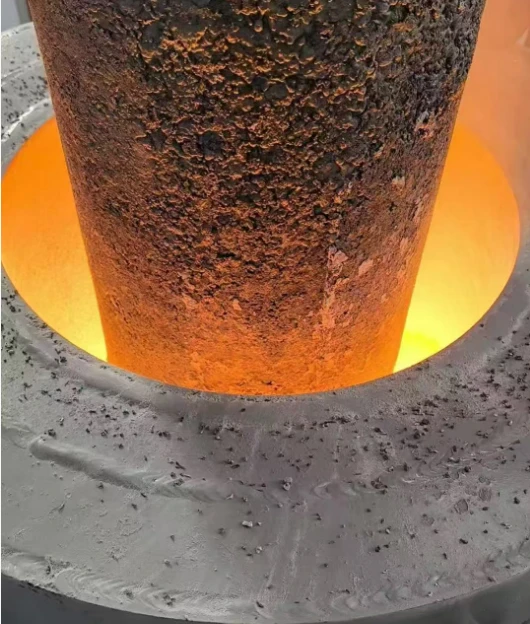
Medical-grade 316LVM (UNS S31673) is typically produced starting with Vacuum Induction Melting (VIM), utilizing carbon deoxidation under a vacuum. This is followed by secondary refining-either Vacuum Arc Remelting (VAR) or Electroslag Remelting (ESR)-to further reduce inclusions and enhance microstructural uniformity.
Following the initial forging of the ingot, the material undergoes hot rolling, where the temperature range must be carefully managed to balance plastic deformation with grain size control. Subsequent cold rolling reduces the thickness while ensuring a clean surface finish and tight dimensional tolerances, all while avoiding recrystallization. For medical-grade 316LVM, a typical grain size requirement is ASTM 5 or finer, striking a balance between mechanical strength and cold formability.
The annealing process is, in essence, a solution treatment: the material is held at 1050–1120°C and then rapidly cooled to ensure the complete dissolution of carbides. Inadequate cooling or insufficient temperature can cause chromium carbides to precipitate at grain boundaries, creating chromium-depleted zones that serve as initiation sites for intergranular corrosion once the material is implanted.
When procuring and accepting material, review the specific records for melting and annealing temperatures and intergranular corrosion test results, rather than relying solely on a certificate of conformity to the F139 standard.
Application Section: Typical Implantation Scenarios for ASTM F139 Sheets
316LVM stainless steel sheet, as specified under the ASTM F139 standard, is primarily utilized in the fields of orthopedic implants and temporary internal fixation devices. Due to its excellent biocompatibility and cost-effectiveness, 316LVM is a widely used material for implants in orthopedic surgery.
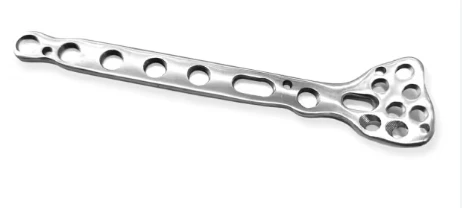
Orthopedic internal fixation devices represent the most typical application. Components such as bone plates, screws, intramedullary nails, pins, orthopedic cables, and skin staples can be fabricated from 316LVM sheet through processes like stamping, machining, or laser cutting. These devices are generally intended for short-term or medium-term implantation and are typically removed once the fracture has healed. While they do not require the same level of long-term corrosion resistance as permanent joint prostheses, they demand high initial mechanical strength, precise forming accuracy, and cost efficiency.
It should be noted that there are structural limitations to the use of F139-grade sheet. In the context of load-bearing joint replacement, 316L stainless steel is increasingly being replaced by cobalt-chromium and titanium alloys. This is because the elastic modulus of stainless steel is significantly higher than that of bone tissue-posing a risk of "stress shielding"-and its resistance to crevice corrosion is inferior to that of cobalt-based or titanium-based alloys. Consequently, the appropriate application scope for F139 sheet is limited to fracture fixation, temporary implants, non-load-bearing or low-load-bearing scenarios, and cost-sensitive medical devices.
Lork Group's supply capacity
Lork Group can provide communication and specification confirmation support for the supply of medical stainless steel sheets and strips according to the project requirements. We offer a high-quality supply of medical-grade 316L stainless steel sheet, available in both annealed and cold-worked conditions. Surface finish options include bright cold-rolled, standard polished, or mirror-polished.
Products you might be interested in
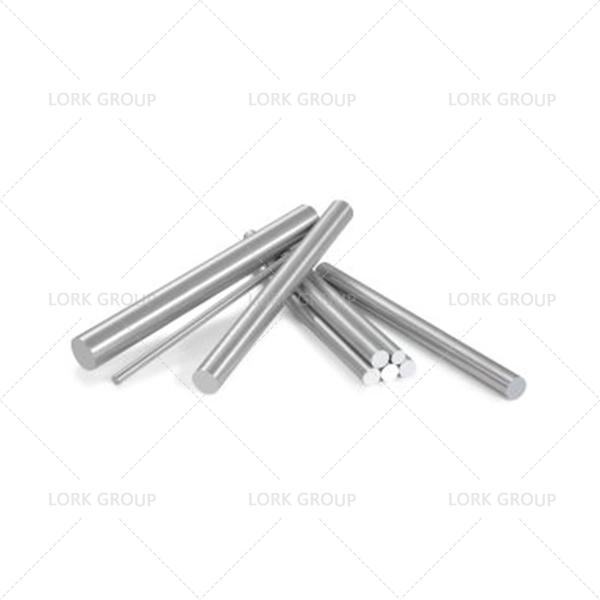
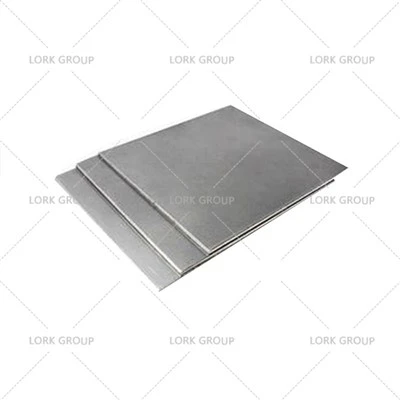


Quality Assurance: Each batch is supplied with comprehensive material certification, covering chemical composition (heat analysis and product analysis), mechanical properties, Pitting Resistance Equivalent (PRE) values, intergranular corrosion testing, and grain size data. Inclusion rating reports can also be provided upon request. The melting process is fully traceable, including ESR (Electroslag Remelting) or VAR (Vacuum Arc Remelting) methods.
Compliance Standards: Products are supplied in strict accordance with ASTM F139-19 and also meet the corresponding requirements of ISO 9001 and ISO 13485.

ISO 9001

ISO 13485
Lork Group
Marketing Operations Department
Email: claire@lorkgroup.com
WhatsApp: +86 199 3707 5488
Send Inquiry