

The Specialty Metals Code Of Satellite And Lunar Exploration — Lork Group
May 21, 2026
Leave a message

Delivery status
Satellites and lunar probes are able to function normally amidst extreme temperature fluctuations, the vacuum of space, intense radiation, and high-velocity impacts-a feat made possible by a precisely interwoven "materials support network." Taking, for instance, the nickel, cobalt, and titanium alloys, as well as the stainless steels supplied by the Lork Group, each serves a distinct mission: some provide structural support, others drive propulsion, some facilitate connections and fastening, while others enable intelligent shape-shifting.
Have you ever encountered a dilemma like this while developing or refining spacecraft-where achieving both lightweight construction and high structural strength seems an impossible balancing act, the reliability of connectors at cryogenic temperatures remains in doubt, or high-temperature creep in hot-section components becomes an insurmountable hurdle?
The following text examines four distinct categories of alloys, dissecting the specific characteristics of their various grades and their practical applications in the aerospace field, with the aim of providing a valuable reference for your material selection and engineering design processes.
Nickel Alloys: High-Temperature and Corrosion-Resistant "Space Skeletons"
Nickel-based superalloys are the "workhorses" of the aerospace sector; thanks to their exceptional high-temperature strength, creep resistance, and corrosion resistance, they are widely utilized in rocket engines, satellite structures, and propulsion system components.
1. Inconel 718 (AMS 5663)
Core Advantages: Possessing exceptional high-temperature strength, corrosion resistance, and fatigue resistance, this alloy maintains stable mechanical properties even in extreme environments, making it one of the most widely utilized nickel-based superalloys currently in use.
Aerospace Applications: It is employed in rocket engine turbine discs, combustion chamber components, satellite structural elements, and high-pressure fuel lines; its outstanding fatigue resistance renders it an ideal material for aerospace fasteners. Within China's new generation of aerospace MJ-thread fasteners, GH4169 (equivalent to Inconel 718) bolts achieve strength grades ranging from 1300 to 1550 MPa.

2. Inconel 625(AMS 5599)

Core Advantages: A Ni-Cr-based solid-solution-strengthened wrought superalloy featuring molybdenum and niobium as its primary strengthening elements, exhibiting excellent corrosion resistance and high-temperature strength.
Aerospace Applications: Used in the piping systems of satellite thrusters, high-temperature components of aerospace engines, and thermal protection structures for spacecraft.
Core Advantages: A nickel-chromium-cobalt-based precipitation-strengthened wrought superalloy, precisely tailored for the temperature range of 700°C to 900°C, offering a combination of high-temperature strength and excellent processing plasticity.
Aerospace Applications: Utilized in aerospace engines for combustion chamber flame tubes, afterburner liners, thrust vectoring nozzle flaps, turbine outer rings, high-temperature load-bearing ring components, and ducts; capable of operating at temperatures reaching 800°C to 900°C while withstanding severe erosion from high-pressure combustion gases.

Cobalt Alloys: The High-Power, Heat- and Corrosion-Resistant "Power Heart"
Cobalt-based superalloys possess higher melting points, lower stacking fault energies, and superior thermal fatigue resistance, making them particularly well-suited for long-term service in extreme high-temperature and corrosive environments.
Key Advantages: A solid-solution strengthened cobalt-based superalloy containing 20% Cr and 15% W, exhibiting moderate rupture and creep strength below 815°C, and excellent oxidation resistance below 1090°C.
Aerospace Applications: Suitable for the manufacture of high-temperature "hot-section" components in aerospace engines, such as combustion chambers, guide vanes, turbine outer rings, injector faceplates, and thrust chambers. In satellite attitude control thrusters, the Haynes 188 cobalt-based alloy (belonging to the same alloy family as GH605) has been utilized to fabricate hydrazine injection capillary tubes.

2. MP159 (AMS 5841)
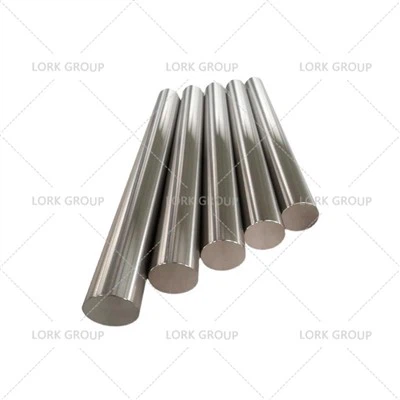
Core Advantages: A cobalt-nickel-based, age-hardenable wrought superalloy that simultaneously exhibits ultra-high strength, excellent corrosion resistance, and exceptional resistance to stress corrosion cracking across a temperature range spanning from cryogenic to moderate levels (ambient temperature up to 600°C).
Aerospace Applications: Used in critical components within spacecraft, high-energy physics devices, and deep-sea exploration equipment that are required to withstand both cryogenic temperatures and high mechanical loads simultaneously.
Core Advantages: A cobalt-chromium-nickel alloy characterized by high strength, as well as excellent corrosion and fatigue resistance.
Aerospace Applications: Used in spacecraft fasteners, springs, and high-strength connectors; it is a standard aerospace-grade cobalt alloy product currently offered by Lork Group.

Titanium Alloys: The Lightweight, High-Strength "Backbone of Aerospace"
Titanium alloys are the preferred materials for lightweighting in aerospace applications. Ti-6Al-4V is widely used for the casings of U.S. first-stage rocket engines and intercontinental ballistic missile engines, as well as for major structural components of the Apollo spacecraft.
Core Advantages: Alpha-beta titanium alloys represent the most widely used and broadly applied class of general-purpose titanium alloys currently available, combining high strength, low density, and excellent corrosion resistance.
Aerospace Applications: They are extensively utilized in rocket engine casings, pressure vessels, fuel tanks, spacecraft structural frameworks, propulsion system components, and lander structural parts. Approximately 85% of the pressure vessels on the Apollo spacecraft were manufactured using titanium alloys.
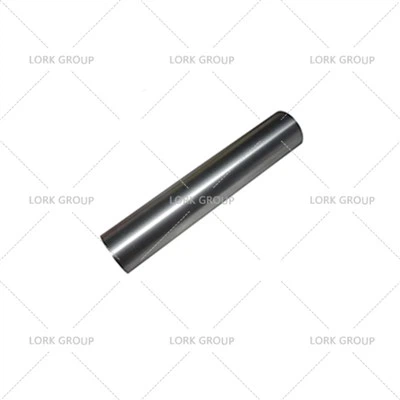
2. Ti-6Al-4V ELI(TC4 ELI / Grade 23)

Core Advantages: An ultra-low-interstitial-element titanium alloy featuring iron and oxygen contents approximately 50% lower than those of standard industrial alloys. It exhibits an elongation of 7% to 15% at liquid hydrogen temperatures (-253°C), demonstrating exceptionally superior cryogenic performance.
Aerospace Applications: Used in the fabrication of liquid hydrogen and liquid oxygen tanks for rockets and missiles, as well as the structural components of sealed cabins for manned spacecraft.
Core Advantage: Low-temperature titanium alloy-alongside Ti-6Al-4V ELI, it serves as a premier structural material for ultra-low-temperature applications.
Aerospace Applications: Used in cryogenic fuel tanks and spacecraft pressurized cabins; it was extensively utilized in both the Gemini and Apollo spacecraft programs.

4. Ti-15V-3Cr-3Sn-3Al (TB5)

Key Advantages: The most distinctive characteristic of this alloy is its unique combination of "pliability during forming and high strength after aging treatment." It exhibits excellent weldability and corrosion resistance, and-through the precise control of heat treatment processes-can be tailored to achieve various strength levels.
Aerospace Applications: It is utilized in spacecraft structures, fluid lines, deployable solar array supports, and rocket engine valves; furthermore, it is widely employed in aircraft models such as Boeing commercial airliners and the B-1B bomber.
Stainless Steel: Cost-Effective, "Reliable Connectors"
Among the tens of thousands of fasteners and connectors in a spacecraft, stainless steel plays an irreplaceable role, thanks to its exceptional low-temperature toughness and machinability.
Core Advantage: Martensitic precipitation-hardening stainless steel, achieving ultra-high strength through aging treatment.
Aerospace Applications: Used for high-strength fasteners and structural components in spacecraft.

Nitronic 40 (XM-19 / AMS 5595)

Core Advantages: Nitrogen-strengthened austenitic stainless steel, featuring a room-temperature yield strength twice that of 304 stainless steel. It maintains extremely low magnetic permeability even after cold working, making it an ideal choice for non-magnetic fasteners in aerospace applications.
Aerospace Applications: Used in components with strict requirements for low magnetism and high strength-toughness, such as spacecraft fasteners, missile casings, and gyroscope frames.
Why does material selection give aerospace engineers such a headache?
As a spacecraft is transported from Earth into outer space, it must endure the violent vibrations of launch, the cryogenic shock of the vacuum environment (down to -270°C), the scorching heat of solar radiation (exceeding +120°C), and the immense impact forces of landing-the selection of a single incorrect material could spell the failure of the entire mission.
This is precisely why an increasing number of aerospace research institutions are choosing to collaborate with specialized suppliers holding AS9100 aerospace quality management system certification, establishing a comprehensive process control system that spans everything from material grade selection to mass delivery.
For details, please visit the website: About Us – Certification.
https://www.lorkalloy.com/certification

About Lork Group
Lork Group is a corporate group specializing in the supply chain management of specialty steels and high-temperature alloys. With 15 years of deep expertise in specialty steel supply chain management, the company serves strategic clients across more than 50 major countries worldwide. The company holds numerous authoritative certifications, including ISO 9001, the AS9100 Aerospace Quality Management System, CE, and ISO 13485.
Supply Chain Advantages:
Strategic reserves from over 400 supply chain partner factories
6 large-scale, modern warehousing centers
Access to over 5,000 technical standards covering seven major international standard systems
Experience supplying nearly 20,000 manufacturing clients across more than 100 countries globally
Equipped with a 50kg pilot-scale melting furnace and a small-scale experimental heat treatment furnace to support the trial production of specialty steel grades and process validation
Product Range: Bars, plates, tubes, strips, wires, rings, and precision-machined components across five major material categories: nickel alloys, cobalt alloys, titanium alloys, precision alloys, and stainless steels-all compliant with various international standards such as ASTM, AISI, AMS, JIS, and GB.
Interactive Poll
What type of material selection challenges is your aerospace project currently facing?
📌 A. Ultra-low temperature structures (below -200°C; liquid hydrogen/liquid oxygen environments)
📌 B. High-temperature hot-section components (above 900°C; combustion chambers, thrust chambers)
📌 C. High-strength connections and fasteners (bolts, nuts, pipe fittings)
📌 D. Balancing lightweighting with structural strength (casings, propellant tanks, support structures)
We invite you to leave a comment below or reach out to our technical team via our official channels; Lork Group is ready to provide you with precise material selection recommendations and technical consultation.
Contact Us
Official Website: https://www.lorkalloy.com/
Email: susan@lorkgroup.com
Phone: +86 199 3707 5488
Business Scope: High-temperature Alloys, Specialty Steels, Nickel Alloys, Cobalt Alloys, Medical Materials, Titanium Alloys, Rare Earth Alloys, Stainless Steels, Aerospace Materials
Product Forms: Bars, Tubes, Plates, Strips, Wires, Rings, Precision Machined Parts
Lork Group- a precise bridge connecting global demand for specialty steel with China's high-end manufacturing.
Send Inquiry