


316L Mod Stainless Steel Bar
In short: What is it? Why does it need "improvement"?
316L Mod is a series of non-standard materials derived from standard 316L (UNS S31603) by adjusting the content of key elements to specifically improve its performance shortcomings in specific corrosive environments. Based on the material properties, our general pricing mechanism is as follows: the price is based on the standard 316L, with an increase based on the increase in Mo or Ni content. There is usually an "alloy surcharge".
"Mod" typically refers to two core improvement directions:
1. Improving resistance to chloride pitting/crevice corrosion: By increasing the molybdenum (Mo) content (from 2.0-3.0% to 3.0-4.0%), and possibly slightly increasing the nickel (Ni) content.
2 .Improving resistance to stress corrosion cracking: By increasing the nickel (Ni) content (from 10-14% to 13-17% or higher), increasing austenitic stability.
Our commonly used physical testing methods are:
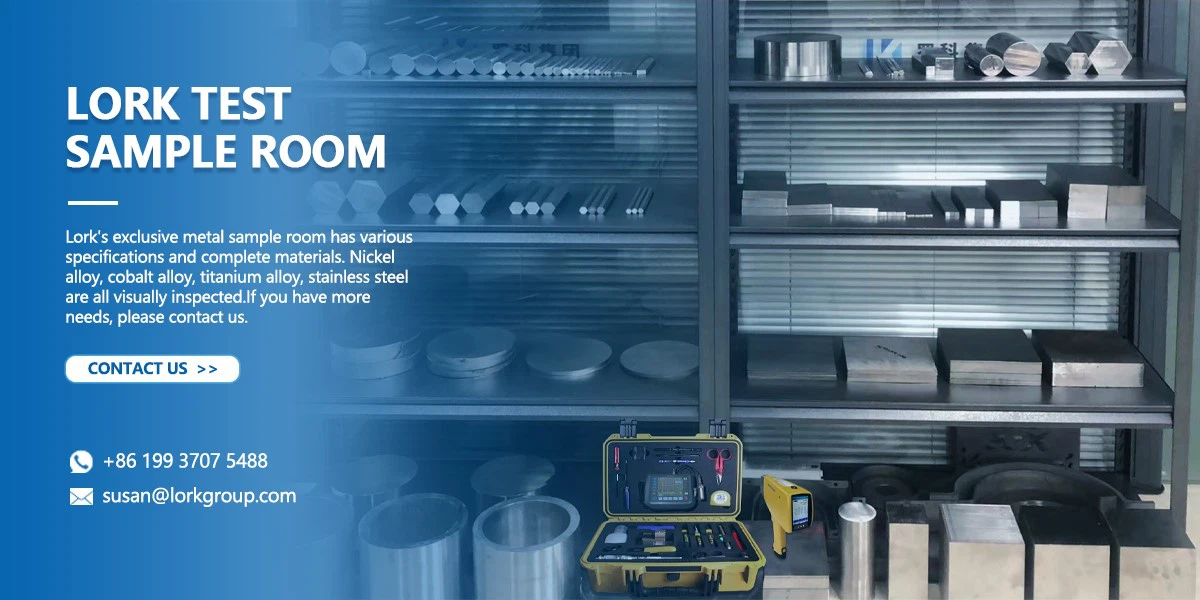
Chemical Composition Verification (PMI - Crucial): Upon receipt, each batch/each bar must be tested on-site using a portable spectrometer (PMI). The core objective is to accurately determine the molybdenum (Mo) or nickel (Ni) content. This is the only and most effective way to prevent suppliers from using ordinary 316L steel as a substitute.
Procurement Specifications and Industry Standards
When procuring non-standard materials, meticulous documentation is your best protection.
1. Material Grade and Standard (Special Notation):
Standard Reference: Can be written as "Refer to ASTM A276 (UNS S31603) requirements, but the chemical composition shall be in accordance with the special provisions of the table below."
Custom Grade: Defined in the contract and drawings as "316L Mod (Mo min 3.2%)" or "316L Mod (Ni min 14.5%)".
2. Final Specifications and Delivery Condition:
Diameter, Length, and Tolerances.
Delivery Condition: Solution annealed.
3. Core Technical Agreement (Must be an appendix to the contract):
Develop a "316L Mod Material Technical Specification", which clearly lists the upper and lower limits of all elements in a table, especially the lower limits of Mo and Ni.
Performance Requirements: Can be agreed upon as "Pitting Equivalent PRE value ≥ 30" (PRE = %Cr + 3.3×%Mo + 16×%N).
Testing and Documentation: A chemical composition report is required for each batch, stating that "Mo and Ni content meets the requirements of a special agreement".
Processing difficulty and key points
(understanding the reasons for high prices)
316L Mod stainless steel bars have machinability very close to standard 316L, with good cutting, forging, and hot forming properties, requiring no special equipment. High-molybdenum types may be slightly "stickier".
Good weldability:
The welding process is the same as for 316L, but a matching modified welding consumable must be used (i.e., the Mo or Ni content of the welding consumable is also correspondingly increased); otherwise, the weld will become a weak point in corrosion resistance.
The key lies in composition control:
The supplier's production challenge lies in precisely controlling the Mo or Ni content within the upper-middle range and ensuring batch stability. This tests their steelmaking process control level.
For more information, please contact:
Email: susan@lorkgroup.com
WhatsApp: +86 19937075488

Chemical Composition
High-molybdenum modified type (common) (You need to finalize this with the supplier)
| Weight% | solution-annealed state |
| Ni | 12.0 - 15.0% |
| Cr | 16.5 - 18.5% |
| Mo | 3.2 - 4.0% |
| Fe | Bal |
| C | ≤ 0.030% |
Since there is no single national standard, you must define the "standard" yourself in the technical agreement based on the results of the negotiation.
Mechanical Properties
(Similar to 316L, solution annealed state)
| Material | solution-annealed state |
| Tensile Strength | ≥ 490 MPa |
| Yield Strength (0.2%) | ≥ 215 MPa |
| Elongation | ≥ 40% |
| Hardness | HB ≤ 217 |
Hot Tags: 316L mod, stainless steel bar, China stainless steel bar manufacturers, factory
You Might Also Like


Send Inquiry