


Monel 404 Alloy Strip
Product Introduction
Monel 404 (commonly known as Alloy 404) is a nickel-copper alloy. It has two advantages: first, its coefficient of thermal expansion is similar to that of glass, ensuring that the material won't crack or leak when the metal and glass are sealed together. Second, its magnetism is negligible; in the annealed state, its permeability can reach 1.0017 max (non-magnetic), meaning it's crucial for preventing signal distortion in any electronic device.
Based on our past inquiries with Alloy 404 customers, it is a high-end, custom-designed material with "precision physical properties" specifically for glass/ceramic sealing applications requiring extremely low magnetic properties. In other words, users who purchase Alloy 404 tapes typically use them for electronic vacuum devices, transistor housings, or precision probes that require glass sealing. Generally, it is necessary to purchase samples first, especially for glass sealing applications. Small samples are purchased first to conduct sealing tests to confirm that thermal expansion matching and airtightness are not a problem before placing a large order.
Materials Market Situation
1. Implementation Standards:
Like people, Monel 404 alloy material also has its own identification number. The 404 alloy we typically supply comes with specific implementation standards for different applications to ensure we deliver qualified products. Below are some of our applicable standards:
ASTM B127: Nickel-copper alloy sheet standard, applicable to strips.
ASTM F96: Special standard for nickel alloy strips for electronic applications; strongly recommended for use when manufacturing electronic devices.
UNS N04404 / W.Nr. 2.4867: Material identification number.
2. Price and Cost:
The raw material cost of Alloy 404 is generally affected by the base prices of nickel and copper. Fluctuations in LME nickel and copper prices can cause monthly price changes.
The price of Alloy 404 strip is calculated based on a combination of thickness, width, hardness, and quantity. Thinner and narrower strips are more expensive. Precision electronic-grade strips are more expensive than industrial-grade strips.
3. Warranty Capabilities:
Warranty Capabilities: When reviewing quotations, we also consider our certifications and the availability of a handheld spectrometer (for testing the chemical composition of materials). Furthermore, whether we can provide a magnetic permeability test report (paid third-party testing) directly impacts your product performance.
Processing difficulty and key points
Monel 404 has better machinability than most nickel-based alloys. Its delivery condition-annealed or cold-rolled-and its hardness directly affect its formability; users who wish to further process it need to pay attention to these factors.
1. Stamping/Deep Drawing: It has good plasticity but will "harden".
Alloy 404 exhibits significant work hardening, becoming increasingly harder during deep drawing. We generally recommend that customers choose the annealed state; an elongation of over 35% in the annealed state is necessary for proper drawing.
The die clearance should be 10-15% larger than that of ordinary stainless steel, and high-viscosity lubricant should be used for proper lubrication.
Most importantly, if the drawing depth is very large (e.g., more than twice the diameter), it should be annealed halfway through to soften it before proceeding.
2. Bending:
Note: Alloy 404 has good plasticity in the annealed state, allowing for smaller bending radii, but the springback is greater than that of ordinary stainless steel, requiring trial molding and adjustment.
For more information, please contact:
Email: susan@lorkgroup.com
WhatsApp: +86 19937075488

Chemical Composition
Special reminder: The content of silicon (Si) and iron (Fe) is crucial. High silicon content affects low magnetism, while high iron content affects sealing compatibility. These two values must be closely monitored during procurement.
| Weight% |
Monel 404 |
| Ni | 52.0-57.0% |
| Cu | 38-43% |
| Fe | ≤0.50% |
| Si | ≤0.10% |
| C/Al/Mn/S | trace amounts |
Mechanical properties
| Material | Antennad state |
| Tensile Strength | 380-480 MPa |
| Yield Strength (0.2%) | 170-310 MP |
| Elongation | 35-45% |
Physical Properties
This is where the value of buying Monel 404 alloy strip lies.:
Magnetic Permeability (annealed state): ≤1.0017 – This is its defining characteristic.
Coefficient of Thermal Expansion: 13.3 μm/m·°C at 70-200°F, compatible with certain glass types.
Elastic Modulus: 169 GPa
Special note: Alloy 404 has relatively low strength, but this is not a drawback-it is designed to be soft and easy to mold. If you need high-strength elastic components, we recommend considering Alloy K500 or other grades.
Key Points of Quality Inspection Process
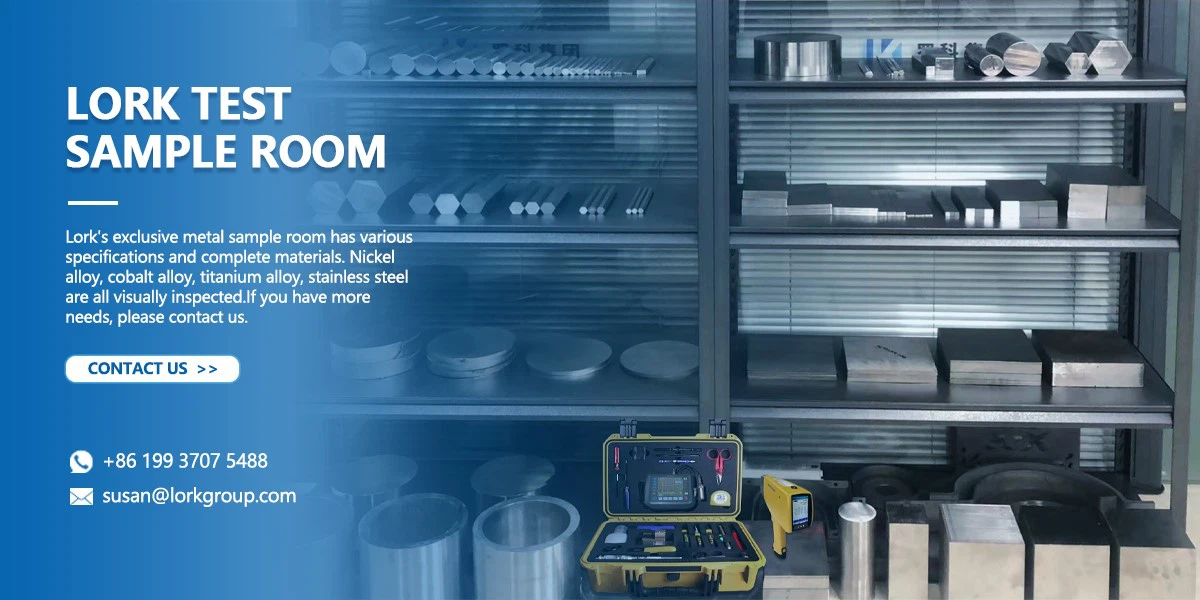
Upon receiving the goods, we will conduct an initial inspection and a second re-inspection of the Monel 404 alloy strip, comparing it against the execution standards and customer requirements. Multiple sampling checks are performed to ensure a high product delivery pass rate. Importantly, to prevent after-sales issues such as product defects upon customer receipt, we generally retain samples in our independent sample testing room, preserving test images and instrument operation videos for traceability.
The initial inspection includes five basic checks: specifications, quantity, tolerances, surface quality, and packaging. For example:
- Dimensional tolerances: The thickness and width of the Alloy 404 strip are checked at multiple points using a micrometer. Edge burrs are carefully inspected.
- Surface quality: Alloy 404 strip is prone to scratches, indentations, and oil stains. The beginning and end of the coil are carefully inspected during unpacking.
The second re-inspection includes 3-6 specialized data tests, such as chemical composition, mechanical properties, hardness testing, and special testing items (Alloy 404 material requires magnetic testing). Adhering to the principle of "standard implementation as the foundation, and disinfection and proper use of testing instruments as the basis," multiple random checks and data comparisons are conducted to ensure the "correctness" of the materials.
- Chemical Composition Report: Spectroscopic analysis report. Focus on nickel (Ni) 52-57%, iron (Fe) ≤0.5%, and silicon (Si) ≤0.1%.
Mechanical Properties: Examine the yield strength and elongation of Alloy 404 strip. Materials with an elongation below 35% in the annealed state are considered unqualified.
- Hardness Testing: Annealed Alloy 404 is generally tested using HRB, with a hardness estimated at around 60-80 HRB. Specific values should be determined according to the specific Alloy 404 implementation standard. For thin strips, surface Rockwell or Vickers hardness is used.
- Magnetic Testing (Critical!): If used in a low-magnetic environment, a magnetic permeability test report for Alloy 404 is necessary. The permeability in the annealed state should be ≤1.0017.
Hot Tags: Monel 404, alloy strip, ASTM F96, W. Nr. 2.4867, Monel 404 alloy strip manufacturers, factory
You Might Also Like


Send Inquiry