

Invar 36 Nickel-Iron Alloy Wire
Products Description
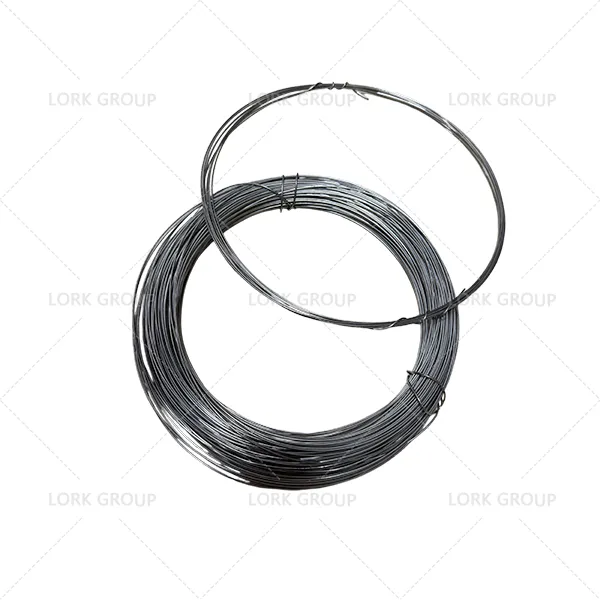
Invar 36 Wire (UNS K93603, Nilo 36, Fe-Ni36, Alloy 36) is a low-expansion iron-nickel alloy wire with a face-centered cubic austenitic structure and 36% nickel.
As a high-precision wire product, Invar 36 wire has an extremely low coefficient of linear thermal expansion (averaging 1.5 × 10⁻⁶/°C) from -100°C to +200°C. It also offers good ductility, toughness, and weldability, along with excellent dimensional stability, making it a core material for manufacturing high-precision electronic instruments, support wires for optical equipment, cryogenic sensors, and specialty cables.
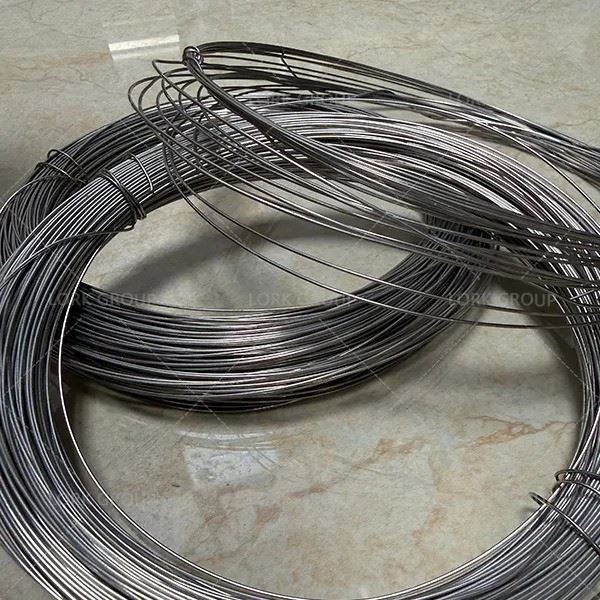
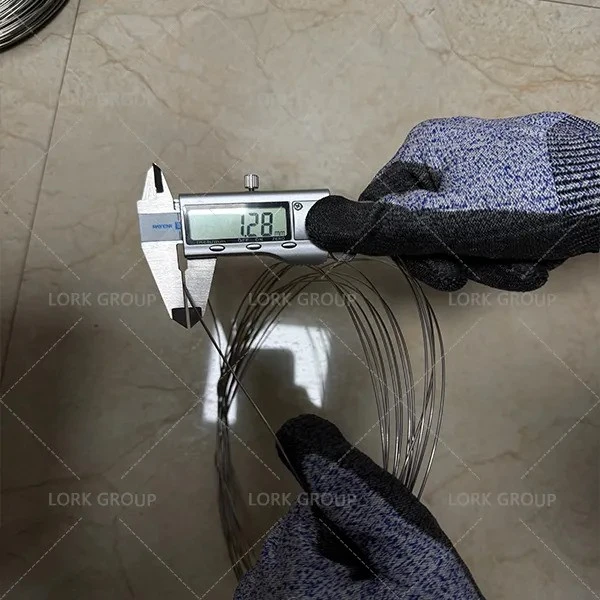
Invar 36 wire is primarily supplied in annealed (soft), light cold-drawn, or hard cold-drawn tempers. Standard diameters range from approximately 0.05 mm to 5.00 mm, with products available in coils or as cut-to-length straight wires. For precision electronic components, optical instruments, and micro-structural parts, specifications regarding diameter tolerance, roundness, surface finish, and straightness can be controlled according to customer drawings. The reference price range for Invar 36 wire is $30.00–$60.00 USD/kg; the minimum order quantity (MOQ) for standard stock wire is 30 kg, and the lead time for custom production is typically 15–20 working days.
Chemical Composition
| Element | content(%) |
|
Ni |
35.00–37.00 |
|
Fe |
rest |
|
Mn |
max0.60 |
|
Co |
max0.50 |
|
Si |
max0.40 |
|
Cr |
max0.25 |
|
C |
max0.05 |
|
P |
max0.015 |
|
S |
max0.015 |
Data is based on ASTM F1684.
Mechanical properties (Annealed)
| Tensile Strength | 450–750 MPa |
| Yield Strength 0.2% | 170–600 MPa |
| Elongation | 20–40% |
|
Modulus of Elasticity |
141 GPa |
Final mechanical properties shall be determined based on wire diameter, cold-working rate, and delivery condition.
Thermal Expansion
| Temperature Range | Average CTE ×10⁻⁶/°C |
| -60-20°C | 1.0–1.5 |
| 20–100°C | 1.2–1.5 |
| 20–200°C | 1.8–2.6 |
The coefficient of thermal expansion of Invar 36 varies depending on the temperature range, heat treatment condition, degree of cold work, and testing method.
Operating environment
Invar 36 is a controlled-expansion alloy designed to match the coefficient of thermal expansion of sealing materials or specific application requirements; it is not intended for high-temperature strength or corrosion resistance. The alloy loses its low-expansion characteristics during long-term service above 230°C and lacks high-temperature load-bearing capacity; furthermore, its corrosion resistance in corrosive media is limited, making it unsuitable for chemically corrosive environments.
Temperature Conditions: The low-expansion characteristics of Invar 36 wire are most stable within the range of -250°C to +200°C. Its Curie temperature is approximately 230°C; above this temperature, ferromagnetism is lost, the low-expansion effect diminishes sharply, and the coefficient of thermal expansion rises rapidly. Consequently, this alloy is unsuitable for long-term high-temperature service.
Atmospheric and Environmental Conditions: Invar 36 exhibits basic corrosion resistance in dry atmospheric environments but is prone to rusting in humid or corrosive media; its corrosion resistance is far inferior to that of stainless steel. Surface protective treatment is recommended for long-term use or outdoor applications.
Stress Conditions: Invar 36 is highly sensitive to residual stress. Stresses introduced during cold working and machining can alter the material's dimensional stability and expansion behavior. For precision applications, stress-relief annealing must be performed after processing to stabilize its properties.
Operating conditions to avoid: Heating in a sulfur-containing atmosphere (which causes hot shortness) and prolonged use above the Curie temperature. Finished parts after annealing are sensitive to mechanical stress; re-annealing is required after machining to restore dimensional stability.
Lork Group
Marketing Operations Department
Email: claire@lorkgroup.com
WhatsApp: +86 199 3707 5488
Hot Tags: Invar 36, Alloy 36, 4J36, UNS K93600, W.Nr. 1.3912, ASTM F1684, Fe-Ni36, Nilo 36, Pernifer 36, low expansion alloy wire, controlled expansion alloy, nickel-iron wire, precision alloy wire, thermostat rod wire
You Might Also Like


Send Inquiry