

What is the ductility of AISI 304 bar?
Oct 24, 2025
Leave a message
AISI 304 is one of the most widely used stainless - steel grades in various industries. As a supplier of AISI 304 bars, I often get questions from customers about the properties of this material, especially its ductility. In this blog, I will delve into what ductility is, how it applies to AISI 304 bars, and why it matters in different applications.

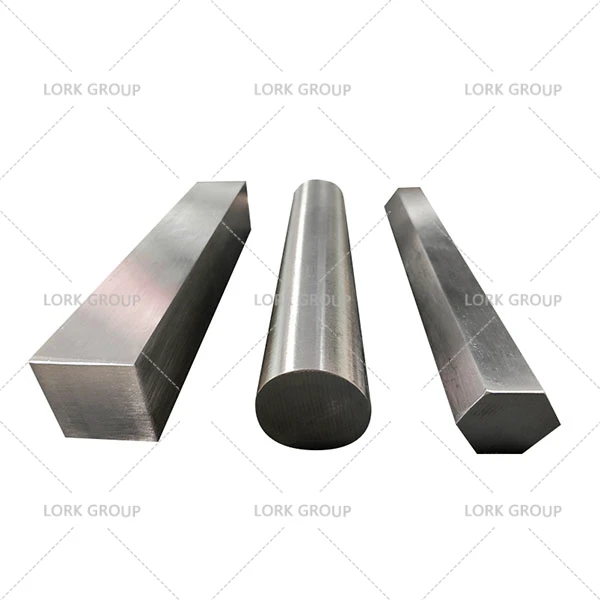
Understanding Ductility
Ductility is a crucial mechanical property of materials, defined as the ability of a material to deform plastically under tensile stress without fracturing. In simpler terms, it measures how much a material can be stretched or drawn into a thinner shape before it breaks. This property is typically expressed as a percentage of elongation or reduction of area.
Elongation is determined by measuring the increase in length of a specimen after it has been pulled to failure in a tensile test. The percentage of elongation is calculated using the formula:
[ \text{Elongation} (%)=\frac{L_f - L_0}{L_0}\times100 ]
where (L_0) is the original length of the specimen and (L_f) is the final length after failure.
Reduction of area, on the other hand, is calculated by measuring the decrease in cross - sectional area of the specimen at the point of failure. The formula for reduction of area is:
[ \text{Reduction of Area} (%)=\frac{A_0 - A_f}{A_0}\times100 ]
where (A_0) is the original cross - sectional area and (A_f) is the final cross - sectional area at the fracture point.
Ductility of AISI 304 Bar
AISI 304 stainless steel, also known as 18 - 8 stainless steel due to its composition of approximately 18% chromium and 8% nickel, exhibits excellent ductility. Under normal conditions, AISI 304 bars can have an elongation of around 40 - 60% and a reduction of area of about 60 - 70%.
The high ductility of AISI 304 bars can be attributed to its austenitic microstructure. Austenite is a face - centered cubic (FCC) crystal structure that allows for easy movement of dislocations within the material. Dislocations are line defects in the crystal lattice, and their movement is responsible for plastic deformation. In an FCC structure, there are multiple slip systems available for dislocations to move, which enables the material to deform plastically over a large range without fracturing.
Another factor contributing to the ductility of AISI 304 bars is the presence of nickel. Nickel is an austenite - stabilizing element, which helps to maintain the austenitic structure at room temperature and even at lower temperatures. This stable austenitic structure enhances the material's ability to deform plastically.
Factors Affecting the Ductility of AISI 304 Bars
Temperature
Temperature has a significant impact on the ductility of AISI 304 bars. At elevated temperatures, the ductility of AISI 304 generally increases. This is because higher temperatures provide more thermal energy to the atoms in the material, making it easier for dislocations to move. As a result, the material can undergo more plastic deformation before fracturing.
Conversely, at very low temperatures, the ductility of AISI 304 may decrease. At extremely low temperatures, the austenitic structure of AISI 304 can transform into martensite, a more brittle phase. This transformation reduces the material's ability to deform plastically and increases the risk of fracture.
Cold Working
Cold working is a process in which a material is deformed at room temperature. When AISI 304 bars are cold - worked, such as by rolling or drawing, the ductility of the material decreases. Cold working introduces a large number of dislocations into the material, which can interact with each other and impede their movement. As a result, the material becomes harder and stronger but less ductile.
However, cold - worked AISI 304 bars can regain some of their ductility through a process called annealing. Annealing involves heating the cold - worked material to a specific temperature and then slowly cooling it. This process allows the dislocations to rearrange and reduce their density, thereby restoring the material's ductility.
Chemical Composition
The chemical composition of AISI 304 bars can also affect their ductility. Minor variations in the amounts of elements such as carbon, sulfur, and phosphorus can have an impact on the material's mechanical properties. For example, an increase in the carbon content can lead to the formation of carbides, which can reduce the ductility of the material. Sulfur and phosphorus are typically considered impurities, and high levels of these elements can also decrease the ductility and increase the brittleness of AISI 304 bars.
Importance of Ductility in Applications
The high ductility of AISI 304 bars makes them suitable for a wide range of applications.
Forming and Fabrication
In the manufacturing industry, AISI 304 bars are often used in forming processes such as bending, stretching, and deep - drawing. The excellent ductility of these bars allows them to be easily shaped into various complex geometries without cracking or fracturing. This is particularly important in the production of components for the automotive, aerospace, and construction industries.
Welding
Ductility is also crucial in welding applications. When AISI 304 bars are welded, the heat affected zone (HAZ) can experience changes in its microstructure and mechanical properties. The high ductility of the base material helps to prevent cracking in the HAZ during the welding process and also ensures that the welded joint can withstand subsequent deformation without failure.
Corrosion - Resistant Structures
AISI 304 is known for its good corrosion resistance, and its high ductility makes it an ideal choice for constructing corrosion - resistant structures. In applications such as chemical processing plants, food processing equipment, and marine structures, AISI 304 bars can be easily fabricated into pipes, tanks, and other components that need to withstand both corrosion and mechanical stresses.
Comparison with Other Stainless - Steel Bars
While AISI 304 bars offer excellent ductility, it's worth comparing them with other stainless - steel bars such as AMS 5617 / Stainless Steel Grade Custom 455 Round Bar, PH13 - 8mo Bar, and PH 15 - 7mo Bar.
Custom 455 is a precipitation - hardening stainless steel. It offers high strength and good corrosion resistance. However, compared to AISI 304, its ductility is relatively lower. The precipitation - hardening process that gives Custom 455 its high strength also makes the material less ductile.
PH13 - 8mo and PH 15 - 7mo are also precipitation - hardening stainless steels. These materials are designed for applications where high strength and good corrosion resistance are required. Similar to Custom 455, their ductility is generally lower than that of AISI 304 due to the precipitation - hardening treatment.
Conclusion
In conclusion, the ductility of AISI 304 bars is a key property that makes them a popular choice in many industries. Their high ductility, combined with good corrosion resistance and other favorable mechanical properties, allows for easy forming, welding, and use in a variety of applications.
As a supplier of AISI 304 bars, I understand the importance of providing high - quality products that meet the specific requirements of our customers. Whether you need AISI 304 bars for a simple fabrication project or a complex industrial application, we can offer you the right materials with the desired ductility and other properties.
If you are interested in purchasing AISI 304 bars or have any questions about their properties and applications, please feel free to contact us for procurement and further discussions.
References
- ASM Handbook Volume 1: Properties and Selection: Irons, Steels, and High - Performance Alloys.
- Callister, W. D., & Rethwisch, D. G. (2012). Materials Science and Engineering: An Introduction.
- Welding Metallurgy of Stainless Steels by John C. Lippold and David J. Kotecki.
Send Inquiry