

How to measure the tensile strength of PH 15 - 7mo Bar accurately?
Jun 19, 2025
Leave a message
How to Measure the Tensile Strength of PH 15 - 7mo Bar Accurately
As a trusted supplier of PH 15 - 7mo Bars, I understand the critical importance of accurately measuring the tensile strength of these bars. Tensile strength is a fundamental mechanical property that indicates the maximum stress a material can withstand while being stretched or pulled before breaking. In this blog post, I will share some professional insights and detailed steps on how to measure the tensile strength of PH 15 - 7mo Bars accurately.
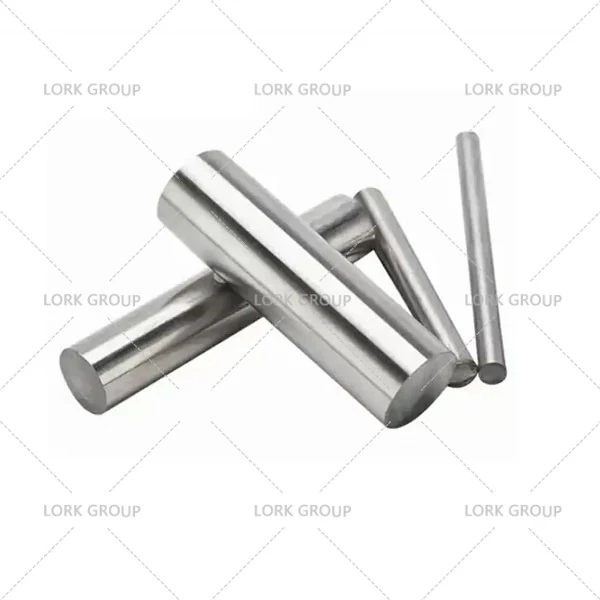

Understanding PH 15 - 7mo Bars
PH 15 - 7mo is a precipitation - hardening stainless steel. It offers a unique combination of high strength, good corrosion resistance, and excellent toughness. These bars are widely used in aerospace, marine, and other industries where high - performance materials are required. Before we start the measurement, it's essential to have a basic understanding of the material properties of PH 15 - 7mo. The chemical composition and heat - treatment conditions can significantly affect its tensile strength.
Preparation for Tensile Testing
- Sample Selection
- Select representative samples from the batch of PH 15 - 7mo bars. The samples should be free from visible defects such as cracks, scratches, or surface irregularities. According to relevant standards, the sample size and shape are usually specified. For example, the sample may need to have a specific gauge length and cross - sectional area. A common shape is a cylindrical specimen with a reduced section in the middle to ensure that the failure occurs in the gauge length.
- Equipment Calibration
- Use a high - quality tensile testing machine. Before testing, the machine must be calibrated accurately. This includes checking the load cell, which measures the applied force, and the extensometer, which measures the elongation of the sample. Calibration should be carried out according to the manufacturer's instructions and relevant international standards such as ASTM E4 (Standard Practice for Force Verification of Testing Machines).
- Measurement of Sample Dimensions
- Measure the cross - sectional area of the sample accurately. For a cylindrical sample, measure the diameter at several points along the gauge length and calculate the average diameter. Then, use the formula (A=\pi(d/2)^2) to calculate the cross - sectional area (A), where (d) is the diameter. The accuracy of these measurements is crucial as the tensile strength is calculated by dividing the maximum load by the original cross - sectional area.
Tensile Testing Procedure
- Mounting the Sample
- Carefully mount the sample in the tensile testing machine. Ensure that the sample is aligned properly to avoid any eccentric loading, which can lead to inaccurate results. The grips of the testing machine should hold the sample firmly without causing any damage to the sample.
- Initial Setup of the Testing Machine
- Set the initial parameters of the testing machine, such as the testing speed. The testing speed is usually specified in relevant standards. For example, ASTM E8 (Standard Test Methods for Tension Testing of Metallic Materials) provides guidelines on appropriate testing speeds for different types of materials. A typical testing speed for metallic materials is in the range of 0.05 - 0.5 inches per minute (1.27 - 12.7 mm per minute).
- Starting the Test
- Start the tensile testing machine. As the machine applies a gradually increasing load to the sample, the load and the corresponding elongation are recorded continuously. The extensometer measures the change in length of the sample within the gauge length.
- Monitoring the Test
- During the test, closely monitor the behavior of the sample. Observe the initial elastic deformation, where the sample returns to its original shape when the load is removed. As the load increases, the sample enters the plastic deformation stage, and permanent deformation occurs. Finally, the sample reaches its maximum load capacity and breaks.
Data Analysis
- Determination of the Maximum Load
- From the recorded data, identify the maximum load (P_{max}) that the sample can withstand before breaking. This is the peak value in the load - elongation curve.
- Calculation of Tensile Strength
- Calculate the tensile strength (\sigma) using the formula (\sigma = P_{max}/A), where (P_{max}) is the maximum load and (A) is the original cross - sectional area of the sample. The result is usually expressed in units of megapascals (MPa) or pounds per square inch (psi).
- Analysis of Elongation and Reduction of Area
- In addition to tensile strength, other important parameters can be calculated from the test data. Elongation is the percentage increase in the length of the sample after fracture, and the reduction of area is the percentage decrease in the cross - sectional area at the fracture point. These parameters provide additional information about the ductility of the PH 15 - 7mo bar.
Comparison with Standards and Specifications
- Industry Standards
- Compare the measured tensile strength with relevant industry standards such as ASTM A693 (Standard Specification for Precipitation - Hardening Stainless Steel Bars). These standards specify the minimum and maximum acceptable values for tensile strength, as well as other mechanical properties. If the measured values are outside the specified range, it may indicate a problem with the material quality or the manufacturing process.
- Customer Requirements
- Also, consider the specific requirements of the customers. Some customers may have more stringent requirements for tensile strength based on their application. For example, in aerospace applications, higher tensile strength may be required to ensure the safety and reliability of the components.
Factors Affecting Tensile Strength Measurement
- Heat Treatment
- The heat - treatment process of PH 15 - 7mo bars has a significant impact on their tensile strength. Different heat - treatment conditions, such as solution annealing and aging, can result in different microstructures and mechanical properties. For example, proper aging can increase the strength of the material through the precipitation of fine particles.
- Strain Rate
- The strain rate, which is the rate of deformation, can affect the measured tensile strength. A higher strain rate may lead to an increase in the apparent tensile strength. Therefore, it is important to follow the specified testing speed to ensure consistent and comparable results.
- Sample Orientation
- The orientation of the sample with respect to the manufacturing process (such as rolling direction) can also affect the tensile strength. In general, samples taken parallel to the rolling direction may have different properties compared to those taken perpendicular to the rolling direction.
Other Related Materials for Comparison
If you are interested in other types of bars, we also supply 316LVM Surgical Steel, AISI 304 Bar, and 316LVM Stainless Steel Bar. These materials have their own unique properties and applications.
Conclusion
Accurately measuring the tensile strength of PH 15 - 7mo bars is a complex but essential process. By following the proper procedures, using calibrated equipment, and considering the various factors that affect the measurement, we can ensure reliable and accurate results. As a supplier, we are committed to providing high - quality PH 15 - 7mo bars that meet or exceed industry standards and customer requirements. If you are interested in purchasing PH 15 - 7mo bars or have any questions about their tensile strength measurement, please feel free to contact us for further discussion and procurement negotiation.
References
- ASTM E4 - Standard Practice for Force Verification of Testing Machines.
- ASTM E8 - Standard Test Methods for Tension Testing of Metallic Materials.
- ASTM A693 - Standard Specification for Precipitation - Hardening Stainless Steel Bars.
Send Inquiry