


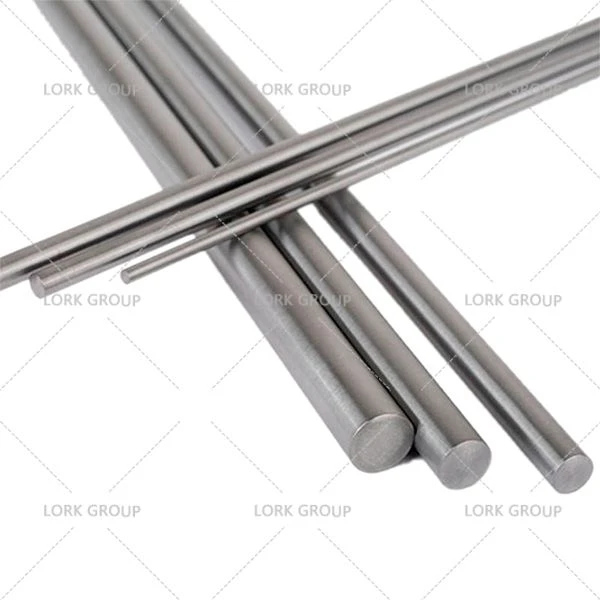
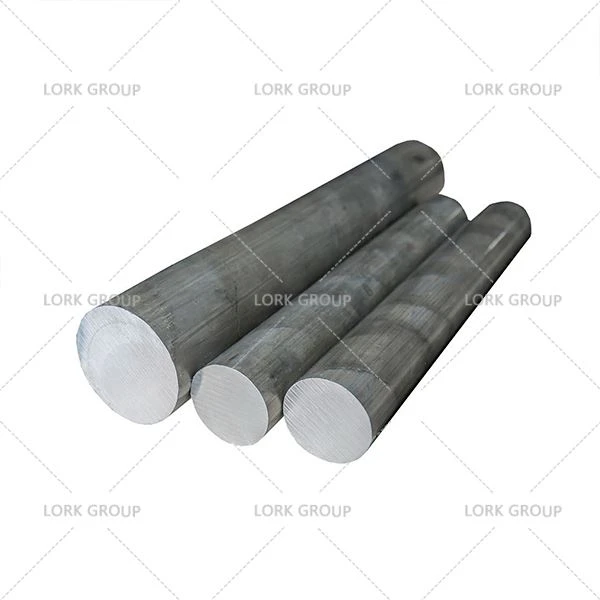
Inconel 693 Nickel Alloy Bar (UNS N06693)
Inconel 693 (UNS N06693; German Standard 2.4642) is a new-generation, high-chromium nickel-based alloy developed based on Inconel 690. Hailed as the "Corrosion Terminator" among nickel-based alloys, this material does not aim for extreme mechanical strength; rather, it pushes resistance to oxidation, sulfidation, metal dusting, and high-temperature carburization to the absolute limit.
Its typical applications include:
Petrochemical Industry: Reactor linings, thermocouple sheaths, and valve internals in synthesis gas (methanol, hydrogen, ammonia) production facilities.
Ethylene Cracking: Cracking furnace tubes and quench pipes, offering resistance to carburization corrosion.
Environmental/Energy Sector: Superheater tube banks in waste incinerators and internal components for biomass gasifiers.
Heat Treatment Industry: Furnace rollers, radiant tubes, trays, and baskets for carburizing furnaces.
Glass Manufacturing: Molten glass transfer piping and crucible components.
In summary: For any operating environment characterized by high temperatures combined with the presence of carbon, sulfur, or chlorine-where standard stainless steels or alloys 600 and 601 prove insufficient-Alloy 693 is a viable solution to consider.
Chemical Composition
(UNS N06693,Inconel 693)
|
Element |
Content (%) |
|
Nickel. Ni |
53.34 - 67.5 |
|
Chromium, Cr |
27 - 31 |
|
Iron, Fe |
2.5 - 6 |
|
Aluminum, Al |
2.5-4 |
|
Titanium, Ti |
≤ 1 |
|
Manganese, Mn |
≤ 1 |
|
Niobium, Nb |
0.50 - 2.5 |
|
Copper, Cu |
≤ 0.50 |
|
Silicon, Si |
≤ 0.50 |
|
Carbon, C |
≤ 0.15 |
|
Sulfur, S |
≤ 0.010 |
Physical Properties
|
Properties |
Metric |
Imperial |
|
Density |
7.77 g/cm3 |
0.281 lb/in3 |
|
Melting point |
1317 - 1367 °C |
2403 - 2493 °F |
Mechanical Properties
(Inconel 693 Bar, ASTM B166, Annealed)
|
Properties |
Metric |
Imperial |
|
Tensile strength (hot-rolled and annealed plate) |
882.6 MPa |
128000 psi |
|
Yield strength |
489.5 MPa |
71000 psi |
|
Elastic modulus |
137 GPa |
19900 ksi |
|
Elongation at break |
42% |
42% |
Machining and Heat Treatment
Inconel 693 is more difficult to machine than alloys 600 and 601, though it is somewhat more manageable than precipitation-hardened alloys such as 625 and 718. However, there are several key points that must be clarified in advance.
1. Melting Process - Purity is Essential
High-end applications typically require a dual-process combination of VIM (Vacuum Induction Melting) and ESR (Electroslag Remelting).
2. Hot Working - Narrow Temperature Window; Precise Control Required
During the hot working of Alloy 693, the temperature must be raised above 1050°C; working at lower temperatures significantly increases the risk of cracking. The 850–950°C range constitutes a "danger zone" that must be traversed as rapidly as possible.
3. Cold Working - Pronounced Work Hardening; Intermediate Annealing Required
4. Heat Treatment - Solution Treatment is a Critical Step
The performance of Alloy 693 is highly dependent on the solution treatment process. This is why our standard delivery condition is typically the solution-annealed state.
5. Welding - Mature Process; Filler Materials Must Be Matched
Alloy 693 exhibits good weldability; TIG (GTAW) or plasma arc welding is recommended. However, it is advisable to perform a solution treatment after welding. Failure to do so may compromise the metal dusting resistance of the weld zone.
6. Machining-Annealed State is Manageable; Aged State is Best Avoided
Based on our machining experience, the most reasonable processing route for Alloy 693 is as follows: Machine and shape the material in its annealed state → Perform final forming operations → Conduct solution treatment → Put directly into service. As a general rule, avoid performing any significant cutting operations after the solution treatment.
Technical Communication
Providing you with an accurate and real-time quotation is contingent upon the truthful and effective exchange of the following technical parameters regarding Inconel 693 alloy bars-please take a look.
Dimensions: Typical diameters range from 20 to 500 mm; lengths are produced as required.
Condition: Solution Annealed (Standard Delivery Condition)
Surface Finish: Black (As-rolled), Turned, or Ground
Melting Process: Is a dual-melt process (VIM+ESR) required? This is typically mandated for high-end applications.
Special Testing: Is Ultrasonic Testing (UT) required? This is mandatory for critical pressure-bearing components.
Recommendations for Condition Selection:
For applications involving extensive machining or welding → Solution Annealed (Standard Condition)
For applications requiring high-temperature pressure resistance → Request the supplier to provide the material in the Solution Annealed state, and verify that the grain size meets or exceeds ASTM Grade 4.
Materials Supplied by Lork Group:
Material Test Certificate (MTC) [Including chemical composition, mechanical properties, and heat treatment records]
Melting Process Certification [Verification of VIM+ESR dual-melt process]
Non-Destructive Testing (NDT) Report [UT inspection, if applicable]
Third-Party Inspection Report [If required]
Email: susan@lorkgroup.com
Phone: +86 199 3707 5488
Hot Tags: Inconel 693, Alloy 693, Nickel Bar, ASTM B166, UNS N06693, solid-solution strengthened nickel alloy, high-temperature alloy bar, metal dusting resistant
You Might Also Like


Send Inquiry