

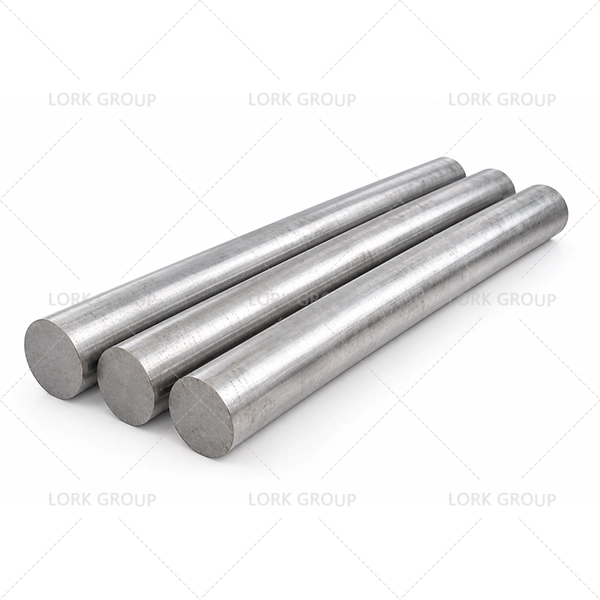
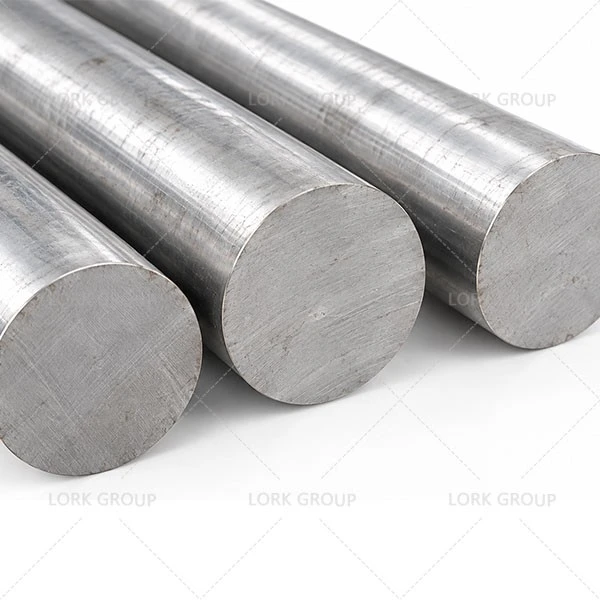
Incoloy 909 Bar
Products Description
Incoloy 909 (UNS N19909 / W.Nr. 1.4965 / GH2909) is an iron-nickel-cobalt-based, precipitation-hardened, low-expansion superalloy in bar form. Developed by Special Metals Corporation (now part of the PCC Group), it has key characteristics that include maintaining a very low and constant coefficient of thermal expansion and a constant modulus of elasticity at temperatures up to 650°C, while simultaneously offering high strength.
Key Performance Advantages
Extremely low and constant coefficient of thermal expansion
The average coefficient of thermal expansion is approximately 7.7 × 10⁻⁶/°C within the range of room temperature to about 425°C (Curie temperature)-roughly half that of conventional high-temperature alloys.
Constant modulus of elasticity
The modulus of elasticity remains virtually constant from room temperature up to approximately 650°C, a unique characteristic distinguishing it from most high-temperature alloys.
High strength
Strengthened by γ″ phase (Ni₃Nb) precipitation, the alloy achieves a room-temperature tensile strength of 1172–1276 MPa and a yield strength of 896–1034 MPa in the aged condition.
Good hot-working plasticity and weldability
By optimizing silicon and aluminum content, Alloy 909 exhibits improved hot-working plasticity and isotropy; it is compatible with various welding methods, including argon arc welding, spot welding, brazing, and electron beam welding.
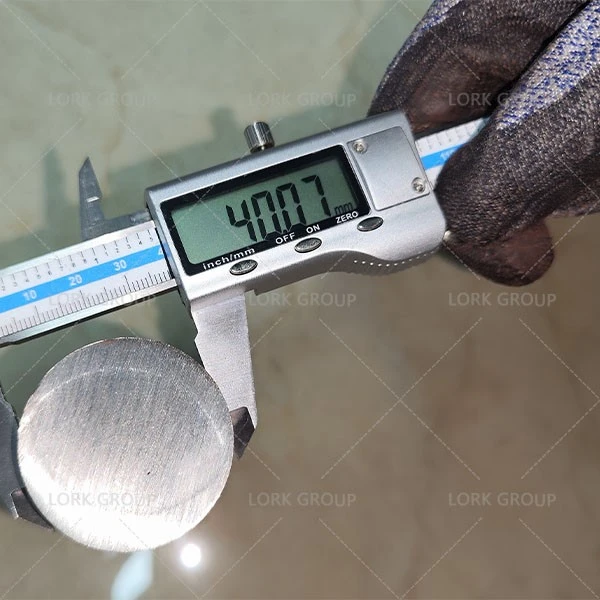
Reference bar specifications
| Hot-rolled bars | Φ10 – 100 mm |
| Forged bars | Φ100 – 350 mm |
Delivery condition: Typically supplied in the solution-treated and aged state; custom sizes and cut-to-length services are available.
Note: The information above is for reference only. Please contact us regarding specific specifications, dimensions, or customization requirements (we reserve the right of final interpretation).📧 layla@lorkgroup.com | 📞 +86 199 3707 5488
Procurement Considerations

①Standard Confirmation: Clearly specify the applicable standard and require a Material Test Certificate (MTC) that includes chemical composition, mechanical properties, and heat treatment records.
②Condition Confirmation: Explicitly specify the condition-either solution-treated plus aged or solution-treated-as properties and machinability differ significantly between these states.
③Coating Requirements: Due to the absence of chromium, evaluate the need for MCrAlY or aluminide coatings when the material is used in high-temperature oxidizing atmospheres.
④Differentiation from Inconel 718: While both alloys have similar strength, the coefficient of thermal expansion (CTE) of 909 is approximately half that of 718, making it ideal for clearance-sensitive components; 718 offers superior oxidation resistance. They are often used in tandem (e.g., 909 for the inner low-expansion ring and 718 for the outer load-bearing/oxidation-resistant ring).
chemical composition
| Ni | 35.0-40.0 |
| Co | 12.0-16.0 |
|
Nb |
4.3-5.2 |
| Ti | 1.3-1.8 |
| Si | 0.25-0.50 |
| Al | ≤0.15 |
| C | ≤0.06 |
| Fe | Rest |
Note: Incoloy 909 contains no chromium (Cr ≤ 0.50%), which is key to its extremely low coefficient of thermal expansion; however, this also results in limited high-temperature oxidation resistance, typically requiring a protective coating for long-term service in oxidizing atmospheres.
Mechanical properties
| Performance Indicators | Room Temperature (20°C) | 650°C |
| Tensile Strength | 1172 – 1276 MPa | ≥ 1034 MPa |
| Yield Strength (0.2%) | 896 – 1034 MPa | ≥ 862 MPa |
| Elongation | 8 – 15% | 25% |
Incoloy 909 retains excellent strength at 650°C; its high-temperature yield strength (≥862 MPa) even approaches the room-temperature levels of certain other alloys.
Physical properties
| Density | 8.19 – 8.26 g/cm³ |
| Melting range | 1395 – 1430°C |
| Curie temperature | 400 – 455°C |
| Modulus of elasticity | Approx. 159 GPa |
| Coefficient of thermal expansion (20–427°C) | 7.7 × 10⁻⁶/°C |
| Thermal conductivity | Approx. 14.8 W/(m·K) |
| Electrical resistivity | Approx. 1.1 μΩ·m |
Significance of the Curie temperature: Below approximately 425°C, the alloy exhibits ferromagnetism and a very low, constant coefficient of thermal expansion; above this temperature, it transitions to a paramagnetic state, and the expansion coefficient begins to rise. Therefore, the optimal operating temperature range for the 909 alloy is below 425°C.
Distinction between Incoloy 909 and Inconel 718
Although both are precipitation-hardened superalloys, their application scenarios are opposed, making them a classic "complementary" pair in the selection of materials for aero-engines.
If 718 were used to replace 909, while its strength is sufficient, its excessive thermal expansion would lead to a loss of control over hot-state clearances-resulting in reduced efficiency at best, or mechanical rubbing at worst.
If 909 were used to replace 718, the alloy would fail due to rapid oxidation when exposed to temperatures above 650°C or to oxidizing environments.
Consequently, the two are frequently used in tandem during aero-engine design: 909 is employed for components requiring dimensional stability (such as turbine casings and seal rings), while 718 is used for parts requiring high strength and corrosion resistance (such as turbine disks, blades, and fasteners).
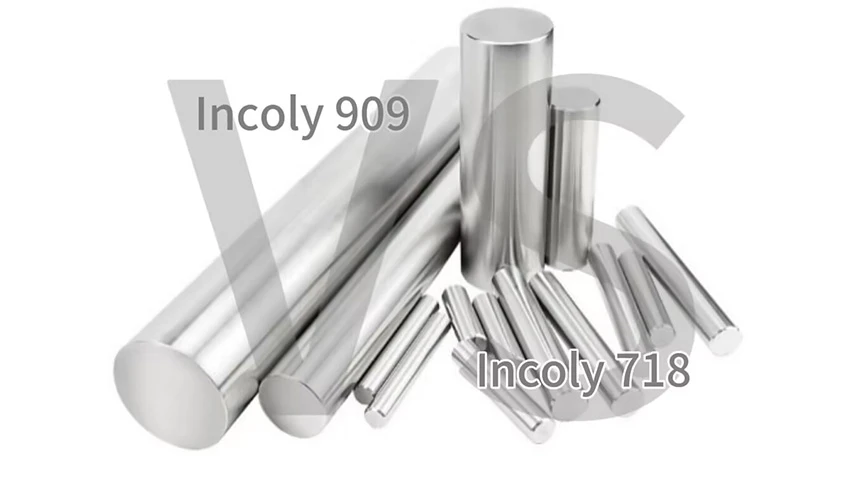
If you would like more information on Incoloy 718 bar stock, you can click the image link to compare it directly with the 909 alloy and select the most suitable option.
Lork Group
Marketing Operations Department
Hot Tags: Incoloy 909 Bar,UNS N19909,Alloy 909,GH2909 / GH909,Low Thermal Expansion Alloy,Fe-Ni-Co Superalloy,Gas Turbine Seals & Casings
You Might Also Like


Send Inquiry