


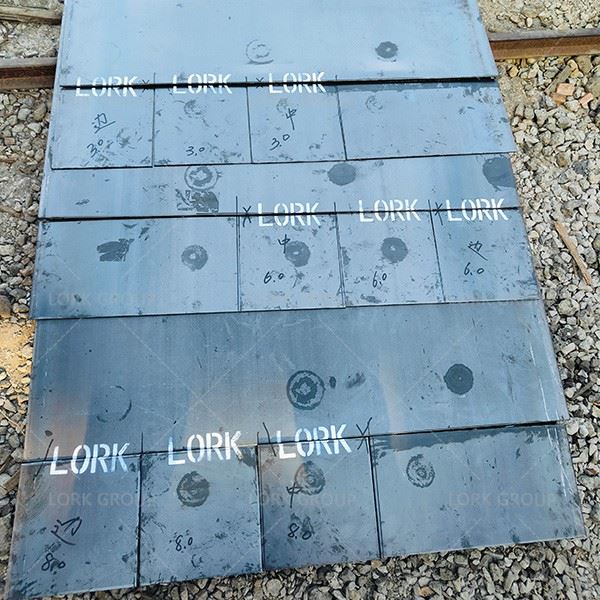

Incoloy 925 Nickel Alloy Plate(ASTM B424, UNS N09925)
Product Introduction
Nickel Alloy 925 was specifically developed to address the most challenging problem in oil and gas extraction, particularly in deep, ultra-deep, and high-hydrogen sulfide (H₂S) and carbon dioxide (CO₂) "acidic oil and gas fields"-the inability to simultaneously achieve high strength and resistance to stress corrosion cracking. Therefore, we often say that Alloy 925 is an all-around special alloy that combines "high strength" and "corrosion resistance", has excellent resistance to sulfide stress cracking (SSC), and good overall corrosion resistance.
Leveraging our extensive sourcing experience, we offer Incoloy 925 nickel alloy sheet in sizes ranging from 0.3mm to 150.0mm in thickness and 1000mm to 3000mm in width. Our machining services can customize lengths to meet your needs. To address any concerns you may have regarding your first collaboration, our sample testing minimum order quantity is as low as 30kg. We also provide quality inspection services with your order and retain samples for traceability. As a result, we have gained a wider range of clients and strengthened the Lork Group's position in the global oil and gas industry's materials applications.
Procurement Specifications and Industry Standards
(Before formally requesting a quote, you need to confirm with your engineer that the material required is alloy 925 plate, specifying the medium and operating conditions.)
Based on our purchasing experience, a professional inquiry for Incoloy 925 nickel alloy plate can assist you in completing your initial procurement plan. It typically includes the following elements:
1. Required Material Standards and Grades:
Sheet/Strip Product Standards: ASTM B424 / ASME SB424. (Unified Grade: UNS N09925.)
Specifications and Conditions:
Thickness x Width x Length (Tolerances must be clearly stated, e.g., thickness ±5%).
Delivery Condition: Must specify "Solution Annealed & Age Hardened".
2. Special Requirements:
Surface Conditions: Hot-rolled and pickled (HRA), machined (e.g., milled), solution polished. Different conditions affect price and subsequent processing.
Non-destructive Testing: Is 100% ultrasonic testing (UT) required? According to which ASTM A578 level? This is a standard requirement for high-end procurement.
Dimensional Accuracy: For thick plates, is control of flatness, camber, etc., required?
3. Marking and Packaging:
Each board must have a clear steel stamp (furnace number, batch number, specifications, material) and be packaged in a moisture-proof and scratch-proof manner.
Our overall pricing is based on the following driving factors:
Alloy Surcharge: Prices are strongly correlated with futures prices of metals such as nickel, molybdenum, and titanium, and are subject to monthly adjustments.
Specifications and Conditions: Thinner plates, wider plates, and plates with special surface treatments have higher unit prices. Aged plates are significantly more expensive than annealed plates.
Purchase Quantity and Certification: Project-based procurement offers limited room for negotiation. Becoming a long-term strategic partner can secure better pricing and technical support.
Depth of Processing: Services requiring pre-cutting or heat treatment will increase costs.
Manufacturing Process and Challenges
Purchasing requires understanding the processing characteristics. Once you understand the processing difficulty and key processing points of Incoloy 925 nickel alloy sheet, you will understand the composition of our quotation, which is also related to the final product quality and potential problems in secondary processing. Whether purchasing raw materials, processing simple parts, or precision-machined parts, skilled processing personnel should pay attention to the following points when performing secondary processing:
Difficult to Machine: This material is typically difficult to machine, exhibiting severe work hardening tendency and generating significant heat during cutting, leading to catastrophic tool wear. This translates to time-consuming, tool-intensive, and costly machining.
The Absolute Core Role of Heat Treatment: The temperature (typically around 620-650°C), holding time, and cooling rate of the aging heat treatment must be precise. Suppliers must use heat treatment furnaces with accurate temperature control and recording systems. This is a critical factor for performance.
Welding Requires Specialized Processes: After welding, the properties of the weld and heat-affected zone are severely degraded, necessitating post-weld overall heat treatment (PWHT) to restore performance. This requires a mature weld qualification (PQR/WPS).
Cold Forming Requires Caution: Under high-strength conditions, cold bending, stamping, and other operations can easily lead to cracking, typically requiring reheating followed by hot forming.
For more information, please contact:
Email: susan@lorkgroup.com
WhatsApp: +86 19937075488

Our one-stop advice: If your final part has a complex shape, we strongly recommend finding a supplier that can provide a full-process service, including "sheet metal supply + blanking + thermoforming/machining + final heat treatment" (Lork Group's supply chain management services can solve related problems for you). This is far more controllable and economical than sourcing raw materials yourself and then outsourcing the processing.
Chemical Composition
Typical value (check the range in the procurement standard)
| Weight% | Incoloy 925 |
| Ni | Bal |
| Cr | 19.5-22.5% |
| Mn | ≤ 0.35% |
| Fe | Approximately 22% or more |
| Mo | 2.5-3.5% |
Mechanical Properties
(Based on ASTM B424 standard)
| Material | Solution + aging |
| Tensile Strength MPa | ≥930 MPa |
| Yield Strength MPa | ≥585 MPa |
| Reduction of Area % | ≥20% |
| Hardness HRC | 28-36 |
Key procurement tip: You must purchase sheet metal in the "solution-treated + aged heat-treated state. Never purchase "solution-annealed state" unless you have your own fully equipped heat treatment workshop and are responsible for it.
Key points of the quality inspection process
Due to the high price and long lead time of purchasing Incoloy 925 nickel alloy plate, we generally recommend that customers have the products tested by an authoritative third-party organization after production to ensure quality. We also suggest including the following testing requirements in the contract and requesting a third-party organization (such as a laboratory with CMA/CNAS accreditation, like SGS, which our customers commonly use) to conduct inspections.
Lork Group consistently adheres to the principle of "one shipment, one inspection," conducting internal quality inspections based on the actual goods, retaining samples, and documenting the entire inspection process with photographs and videos. Material testing reports are generated, and relevant reports and documents are issued based on the materials.
A third party will conduct testing on the submitted samples. Typical physical testing (sampling verification, this is the minimum) includes: chemical composition verification, mechanical property verification, and hardness testing. Based on the final data, the third party will also issue a material testing report, heat treatment records, non-destructive testing report, etc. The entire process is handled according to your contract.
Hot Tags: incoloy 925, nickel alloy plate,astm b424, uns n09925, China incoloy alloy manufacturers
You Might Also Like


Send Inquiry