


Solving H₂S Corrosion in Deep Sour Gas Wells: The MP35N Engineering Solution
Apr 16, 2026
Leave a message
Solution Overview
In acidic oil and gas fields containing hydrogen sulfide (H₂S), ordinary high-strength steel can experience sulfide stress corrosion cracking (SSCC) within hours, leading to downhole tool failure, unplanned downtime, and even safety accidents. MP35N is a cobalt-nickel-chromium-molybdenum quaternary alloy that achieves an ultra-pure microstructure through double vacuum melting (VIM-VAR), followed by cold working and aging to obtain a unique combination of ultra-high strength and excellent corrosion resistance. It is the highest-strength alloy approved by NACE MR0175 for unrestricted acidic conditions, providing a reliable engineering solution for downhole tools, valve assemblies, and pump shafts in deep-sea acidic gas fields.
Basic Information
- Lork Group: Leading manufacturer and stocker of cobalt alloys
-
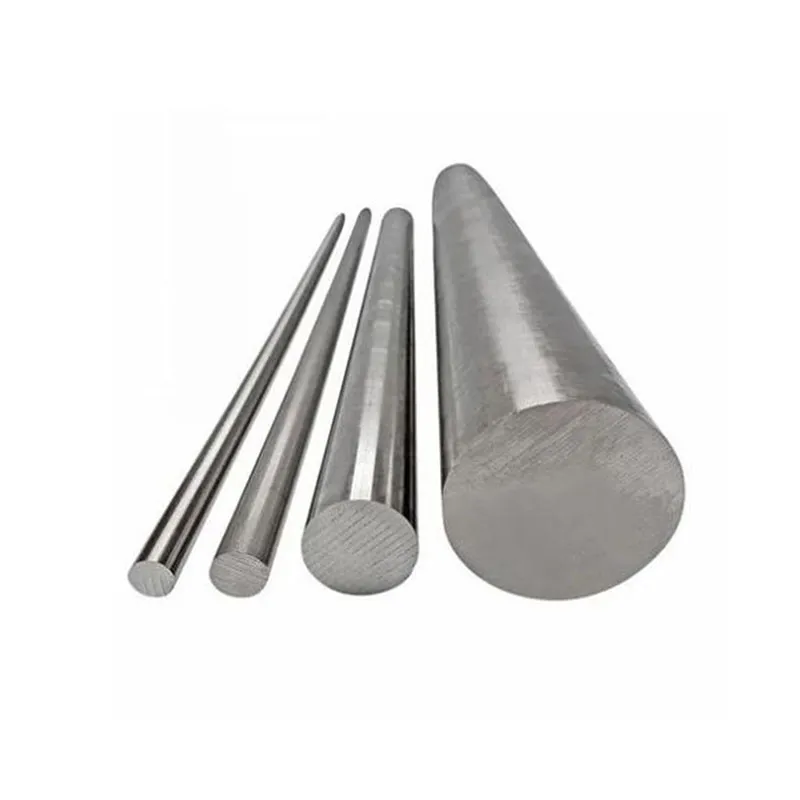
Supply Forms: MP35N round bars (bright/black), square bars, hexagonal bars, plates, wires, tubes, forgings
-
Diameter Range: Φ5mm – Φ150mm (customizable)
-
Length: Cut to length, maximum 3000mm
-
Inventory Status: Φ10mm – Φ80mm in stock, 7-10 day delivery supported
Technical Specifications

Aerospace
Standard: AMS 5844 / 5845

Surgical Implants
Standard: ASTM F562

Cardiac Stent Wire
Standard: ISO 5832-6

Acidic Oil and Gas Fields
Standard: NACE MR0175 / ISO 15156
Taking core applications in the oil and gas industry as an example
- Downhole Tools: Packers, safety valves, anchoring tools, directional drilling tools-requiring long-term exposure to complex loads in H₂S environments.
- Submersible Pump Drive Shafts: Simultaneously subjected to torsional stress, seawater corrosion, and potential H₂S exposure.
- Valves and Pump Shafts: Control valves, safety valve stems, and pump shafts for acidic media.
- Fastening Systems: Pins, tension bolts, shear bolts, engine bolts-requiring both ultra-high strength and H₂S resistance.
- Cable/Instrument Suspension: Cables used to suspend instrument packages in acidic wells-one of the early successful applications of the MP35N.
Data Parameter Table
MP35N List


Chemical composition table
| Element | Content Range (%) | Explanation |
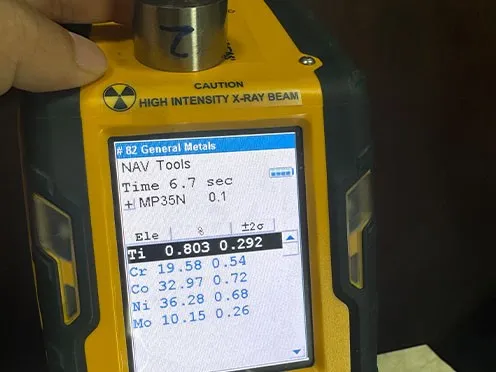
| Co | balance (approx. 33-37%) | Cobalt-based, providing thermal stability and corrosion resistance. |
| Ni | 33.0 – 37.0 | Nickel matrix, enhancing toughness |
| Cr | 19.0 – 21.0 | Chromium provides antioxidant and corrosion resistance. |
| Mo | 9.0 – 10.5 | Molybdenum enhances resistance to pitting and crevice corrosion. |
| Ti | ≤ 1.0 | Titanium participates in precipitation strengthening. |
| Fe | ≤ 1.0 | Strict control to reduce impurities |
Mechanical properties table (by condition)
| Material Condition | Tensile Strength (kSi) | Yield Strength (kSi) | Elongation (%) | Hardness (HRC) |
| Annealed state | 120 – 140 | ~60 | 40 – 70 | 20 – 38 |
| AMS 5844 (Cold working strengthened) | 255 | 225 | 12 | 45 |
| AMS 5845 (Cold working + aging) | 260 | 230 | 8 | 38 min |
| NACE MR0175 (Aged state) | 190 – 220 | 180 – 210 | 10 | ≤ 51 |
Physical properties table
| Attribute | Typical Value |
| Density | 8.42 – 8.43 |
| Elastic Modulus | 233 |
| Shear Modulus | 83.4 |
| Operating Temperature Range | -184 to 427 |
All You Need To Know
1. Why is H₂S a "hidden killer" of oil and gas field materials?
In acidic environments containing hydrogen sulfide (H₂S), high-strength steel faces a unique failure mode-sulfide stress corrosion cracking (SSCC).
H₂S reacts with water on the steel surface to generate hydrogen atoms. These hydrogen atoms diffuse into the metal lattice, accumulate in high-stress areas, and cause brittle fracture of the material at conditions far below its yield strength. This fracture often occurs without warning and has extremely serious consequences-downhole tool failure can lead to stuck pipe, unplanned downtime, or even safety accidents.
2. How to solve the H₂S corrosion problem in MP35N?
MP35N's resistance to H₂S stems from three aspects:
- Ultra-pure melting process: Employing dual vacuum melting (VIM-VAR), it significantly reduces impurities such as sulfur (S) and phosphorus (P), minimizing grain boundary segregation and inclusions-the core sources of crack initiation in H₂S environments.
- Unique phase transformation strengthening mechanism: During cold working, thin, coherent hexagonal close-packed (HCP) lamellae form in the metastable face-centered cubic (FCC) matrix of MP35N. This lattice strain results in ultra-high strength; aging treatment further precipitates Co₃Mo compounds at the FCC/HCP interface, achieving secondary strengthening.
- NACE MR0175 compliance: MP35N is the highest strength alloy approved under NACE MR0175 for unrestricted acidic conditions. For the oil and gas industry, NACE MR0175 certification is a basic entry requirement for material procurement-without this certification, materials simply cannot enter sour gas fields.
3. How to choose materials for acidic environments?
From the performance comparison radar chart we at Lork Group made on the right side, comparing MP35N with Inconel 718 and 17-4PH in five dimensions-tensile strength, resistance to H₂S SSCC, seawater corrosion resistance, and pitting corrosion resistance-MP35N has a clear advantage in the "resistance to H₂S SSCC" dimension. Except for a slight disadvantage in the upper limit of operating temperature, it is almost the best cobalt alloy for gas and oil well applications!
Selection Recommendation: If your application requires acidic environments (H₂S) and ultra-high strength, MP35N is the preferred choice. While Inconel 718 offers the advantage of a higher operating temperature, its SSCC resistance is inferior to MP35N in acidic conditions containing H₂S. In acidic environments with H₂S partial pressures exceeding 0.05 psi, or when the design stress exceeds 70% of the yield strength, the heat-affected zone of Inconel 718 is prone to intergranular stress corrosion cracking, while MP35N remains intact under these conditions.

Featured Case Studies
Case Study 1
Application of MP35N Lee Plug in Deep-Sea Acidic Wells
The MP35N expansion plug, developed by The Lee Company, is made entirely of MP35N alloy and conforms to NACE MR0175/ISO15156 standards. This product can withstand pressures of 30,000 psi (approximately 2068 bar) and temperatures of 400°F (approximately 204°C), making it particularly suitable for deep-sea downhole equipment such as directional drilling tools, logging tools, and packers. MP35N's resistance to crevice corrosion in seawater makes it the preferred sealing solution for deep-sea acidic wells.
Case Study 2
Upgrading Downhole Tool Materials for Deep-Sea Acidic Gas Fields in Europe
Challenge: Our European client's existing high-strength steel downhole tools in an Atlantic deepwater gas field project frequently experienced stress corrosion cracking under high H₂S partial pressure conditions, leading to unplanned downtime and a significant increase in operating costs.
Solution: Lork Group customized and supplied NACE MR0175 compliant MP35N bars for the client, providing a 3.2 material certificate and a NACE witness test report.
Result: Tool service life was extended from 3 months to over 18 months, and the client upgraded all of their subsequent three projects to MP35N material.



Specify MP35N for Your Sour Gas Project?
Selecting the right MP35N requires comprehensive consideration of multiple factors, including H₂S partial pressure, operating temperature, design stress, and processing conditions. To help you obtain the most accurate material solution, please fill in the following operating information. Our metallurgical engineers will provide you with material selection advice and a technical quote within 4 hours.
SOperating Condition Requirements Table
| Serial Number | Question | Remarks |
| 01 | What is the target application? (Downhole tools/Valves/Pump shafts/Fasteners/Other) | To help identify the specific product form. |
| 02 | Required specifications: Diameter mm, Length mm _For inventory matching; Required quantity: _kg/ton. |
Basis for quotation. |
| 03 | Execution standard: AMS 5844 / AMS 5845 / NACE MR0175 / ASTM F562 / Other | Certification requirements |
| 04 | H₂S partial pressure: _psi or _% | Key operating parameters |
| 05 | Operating temperature: _Maximum °C, _Minimum °C | Thermal stability assessment |
| 06 | Operating pressure/design stress: _MPa | Strength requirement assessment |
| 07 | Is an EN 10204 3.2 material certificate required? Yes/No | Third-party witnessing requirements |
| 08 | Is a NACE witnessed test report required? Yes/No | Special certifications |
| 09 | Your name, company, position, email, phone | Follow-up information |
Lork Group Technical Services
Technical Team Support: The team provides material selection consultation and processing suggestions by metallurgical engineers with extensive experience in special alloy applications.
Quality Control: Strictly adhere to ASTM, AMS, and NACE standards, and provide the EN 10204 3.1/3.2 material specification.
Third-party testing: We can arrange BV, SGS and other third-party witnessing tests according to customer requirements.
Send Inquiry