


Latest News ! ! ! The MP35N Procurement Guide Is Here - Lork Group
Jan 12, 2026
Leave a message
Procurement Introduction
Lork Group has summarized the following information regarding its procurement plans and customer inquiries for MP35N cobalt alloy materials over the past year, presenting a comprehensive collection of procurement issues related to this "ultimate cobalt alloy." This article will be updated periodically as procurement of this material changes. Take a look!
How to ensure the smooth execution of the procurement plan, allowing us to purchase the qualified MP35N cobalt alloy we need in a short time and at a reasonable price?
This process is divided into the following four stages. In each stage, we have raised some questions and provided some tips to prevent fraud (based on our own procurement experiences where we were scammed, or the experiences of our clients who were scammed before contacting us).
Stage 1: Demand Confirmation and Initial Supplier Screening (Foundation Stage)
Stage 2: In-depth Supplier Evaluation and Selection (Core Assessment)
Stage 3: Contract Signing and Order Execution (Risk Mitigation)
Stage 4: Goods Acceptance and Usage Tracking (Closed-loop Management)
A concise definition: What is it? Why is it considered the best/top-tier?
MP35N is a cobalt-nickel-chromium-molybdenum multiphase alloy (typically approximately 35% Co, 35% Ni, 20% Cr, and 10% Mo). It is not strengthened by conventional heat treatment, but rather achieves its unparalleled performance through a special "cold working + aging treatment" process.
Its core value lies in simultaneously achieving three top-tier performance characteristics that are usually contradictory:
- Ultra-high strength: Tensile strength easily exceeds 2000 MPa (2-3 times that of ordinary high-strength steel).
- Top-tier corrosion resistance: Its resistance to chloride pitting, crevice corrosion, and stress corrosion cracking is comparable to nickel-based alloys (such as Alloy C-276).
- Excellent fatigue strength and toughness: Even at ultra-high strength, it maintains good fracture toughness and excellent fatigue resistance.
Typical application scenarios (determining your purchasing direction):
1. Medical devices (largest market): Pacemaker leads, neurostimulator electrodes, orthopedic implants (such as spinal rods), surgical instruments. Requires biocompatibility, long-term stability in the body, and fatigue resistance.
2. Deep sea and oil and gas: Critical components of downhole tools, subsea connectors, high-performance springs, and fasteners. Requires resistance to H₂S/CO₂ corrosion and the ability to withstand ultra-high pressure.
3. Aerospace: Engine components, high-stress fasteners, landing gear components.
4. Specialized industries: Chemical high-pressure valve stems, high-reliability springs.
Key point: If your client is from medical research and development, deep-sea engineering, or aerospace departments, they usually choose MP35N only after all conventional options (such as titanium alloys, stainless steel, and ordinary nickel-based alloys) have failed. Cost is the last consideration; performance and reliability are paramount.
Lork Group's MP35N
Here, we first provide you with information on this product line from the Lork Group: mp35n. You can click to view detailed information or contact us for pricing and specifications.
MP35N Alloy
We supplyMP35Nn cobalt alloy in the form of bars/rods, plates/sheets, tubes/pipes, coils, strips, wires, forgings, and more.
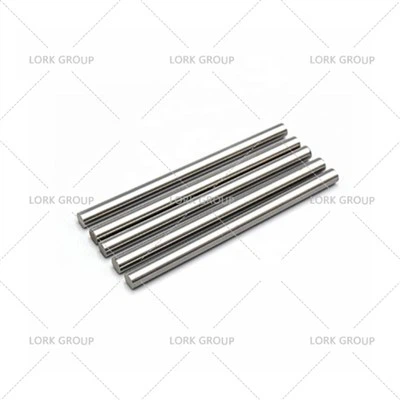 AMS 5844 MP35N
 MP35N Cobalt Alloy Tubes (ASTM F562, UNS R30035)
 MP35N Alloy Sheet
Phase 1: Requirements Confirmation and Initial Supplier Screening (Foundation Stage)
1. How to lock down internal requirements? (Avoiding Source Errors)
Action: Hold a formal meeting with the technical/R&D department to create an "MP35N Material Requirements Specification," which must be clearly documented in writing:
- End Use: Is it for implantable medical devices? Or core components for deep-sea equipment? This determines the regulatory requirements.
- Required Performance Parameters: Specific lower limits for tensile strength and yield strength; whether specific conditions from the ASTM F562 standard are required (e.g., cold-drawn + aged condition).
- Key Additional Requirements: Surface treatment (electropolishing?), clean packaging, biocompatibility report (ISO 10993), or SSC resistance report (NACE TM0177).
- Alternative Solutions: Must ask: "If the cost or delivery time of MP35N is unacceptable, what is the second option?" Clearly define alternatives (e.g., Elgiloy Alloy, 35NLT, or special titanium alloys) to provide leverage in negotiations.
2. How to select initial suppliers? (Setting Hard Thresholds)
Core Judgment: "Filter targets" is paramount.
Action Checklist:
- Industry Track Record Review: Require the supplier to provide photocopies of MP35N supply contracts or customer lists from the past 3 years in the same field (medical, deep-sea, aerospace) (sensitive information can be redacted). Vague claims of "experience" are not credible.
- Quality System Certification: Must hold ISO 13485 (medical devices) or AS9100 (aerospace). This guarantees the management system.
- Preliminary Technical Dialogue: Ask a specific, in-depth technical question (e.g., "For a wire with a diameter of Φ3mm, how do you ensure the axial uniformity of its performance after cold working?"). Observe whether the contact person is a technical sales representative or purely a business person; the former is more reliable.
Phase 2: In-depth supplier evaluation and selection (core assessment)
1. What are the key focus areas of on-site technical audits? (Mandatory if conditions permit)
- Audit Focus (Where the real expertise is demonstrated):
Raw Material Inventory and Traceability: Check the inventory of raw materials. Does each coil/bar have a clear, unique manufacturer's label and heat number? Can they be matched with the certificates? A disorganized warehouse indicates disorganized management.
- Key Process Capabilities:
Drawing/Rolling Workshop: Does it have precision cold working equipment? The performance of MP35N depends on cold working; this is the core of its capabilities.
Heat Treatment Workshop: Does the aging heat treatment use controllable vacuum/atmosphere furnaces? Is there a complete temperature recording system?
Cleanroom and Surface Treatment: Do medical-grade products have a clean packaging area? What is the condition of equipment, such as electrolytic polishing equipment?
- Testing Laboratory:
Mechanical Performance Testing: Is there a universal testing machine? Are the operations standardized?
Chemical Composition Analysis: Is there a spectrometer (OES)? Can on-site PMI (Positive Material Identification) be performed?
Metallographic Analysis Capability: Is there equipment to observe the microstructure? This is crucial for judging the quality of heat treatment.
Key Point: Check the equipment calibration labels to ensure they are within their validity period.
2. How is "sample testing" performed?
Action: Request samples of the same specifications from 2-3 suppliers who have passed the initial screening.
Testing Plan:
Blind Testing: Conceal supplier information and submit samples to an internationally or domestically recognized third-party testing agency (such as SGS, BV, COMAC Laboratory, or the Aeronautical Materials Research Institute).
Testing items must be comprehensive:
Complete elemental chemical analysis (especially verifying Co, Ni, Cr, Mo, Ti).
Complete mechanical property testing (tensile strength, hardness).
Metallographic inspection (to check grain size, inclusions, and signs of overheating or burning).
Specialized testing as needed (e.g., corrosion testing, fatigue testing).
Decision: Select suppliers based on test data reports, not on verbal promises or slightly lower prices. Suppliers whose data does not meet the standards will be eliminated.
Phase 3: Contract Signing and Order Execution (Risk Mitigation)
1. What are the contents of the technical agreement?
- The contents must include:
Material Standards: Clearly specify ASTM F562, and indicate the condition as Cold Worked & Aged.
Performance Guarantee Values: List the specific numerical ranges for tensile strength, yield strength, elongation, and hardness.
Chemical Composition Window: Especially critical impurity limits, such as C≤0.025%.
Testing and Acceptance Methods: "All mechanical property tests shall be performed according to ASTM E8, with the sample orientation being longitudinal."
Document Delivery Checklist: Clearly require that each batch of goods must be accompanied by: original manufacturer's MTR, third-party biocompatibility/corrosion report, heat treatment records, non-destructive testing report, and material certificate (CoC).
Change Control: "Any changes to processes or raw material sources that may affect performance must be notified in writing 90 days in advance and receive our written approval."
2. What are the price and delivery terms?
Price: Typically a "cost + processing fee" model. The pricing formula should be locked in, and the fluctuation mechanism for metal prices, such as nickel and cobalt, should be clearly defined.
Minimum Order Quantity (MOQ) and Delivery: Clearly define the MOQ and agree on the possibility of phased delivery. Make "receipt of a complete and qualified document package" a prerequisite for payment of the down payment or final payment.
Phase 4: Goods receipt, acceptance, and usage tracking (closed-loop management)
1. What are the Incoming Quality Control (IQC) items?
Document Verification: Verify all accompanying documents, check if the batch number matches the physical product markings, and confirm that the reported data is within the agreed-upon range.
Rapid Physical Screening:
PMI (Mandatory): Use a handheld spectrometer to verify the material composition of each batch, bundle/piece. The main elements must meet the requirements.
Hardness Testing (Sampling): Quickly verify if the strength level is within the expected range.
Dimensions and Appearance: Inspect for surface defects (cracks, folds, dents) under good lighting.
Status Locking: Materials that pass inspection are immediately labeled with the company's internal inspection status tag and transferred to the qualified stock area, strictly separated from materials awaiting inspection and rejected materials.
2. How are initial sample inspection and production tracking conducted?
Initial sample processing: Conduct small-batch trial production using the first batch of materials.
Performance tracking: Record processing parameters (tool wear, cutting force, etc.) and test the key performance of the finished parts (e.g., fatigue life, corrosion rate).
Problem feedback mechanism: Establish a rapid technical communication channel with suppliers. Any processing abnormalities or performance concerns should be immediately reported and jointly analyzed.
3. What are the methods for periodic re-evaluation?
Annual audit: Conduct an annual performance review of core suppliers, including quality pass rate, on-time delivery rate, and problem response speed.
Regular third-party random inspection: Even if the cooperation is going smoothly, materials should be sent to a third party for random inspection of key items at least once a year as continuous monitoring of the supplier's quality system.
How To Cooperate With Us?
If you want to know more about the spot specifications of products or need customized products, get a quick quote, etc., please contact us!
Our address
Erqi District, Zhengzhou City, Henan Province, China
Phone Number
(86)-19937075488
susan@lorkgroup.com

Send Inquiry