

What are the tolerance requirements for Inconel 718 bars?
May 19, 2025
Leave a message
In the realm of high - performance alloys, Inconel 718 bars stand out as a material of choice for a wide range of applications due to their exceptional mechanical properties and corrosion resistance. As a reliable supplier of Inconel 718 bars, understanding the tolerance requirements for these bars is crucial. In this blog, we will delve into the key tolerance aspects associated with Inconel 718 bars, exploring how they impact the quality and functionality of the final products.
Diameter Tolerance
The diameter of Inconel 718 bars is one of the most critical dimensions, and strict tolerance requirements are in place. For precision - engineered components, the diameter tolerance can significantly affect the fit and performance. In general, the diameter tolerance for Inconel 718 bars is classified according to different standards. For example, in the aerospace industry, where components need to meet extremely high - precision requirements, the diameter tolerance may be as tight as ±0.01mm for smaller - diameter bars.
When it comes to larger - diameter bars, the tolerance may be slightly more relaxed, but still within a narrow range. A common tolerance for medium - to large - diameter Inconel 718 bars used in industrial applications could be around ±0.05mm. This level of tolerance ensures that the bars can be used in assemblies without causing issues such as excessive clearance or interference.
Our company, as a supplier, adheres to these strict diameter tolerance requirements. We use advanced measuring equipment, such as high - precision calipers and laser - based measuring systems, to ensure that each bar meets the specified diameter tolerance. By maintaining these high standards, we can provide our customers with Inconel 718 bars that are suitable for their most demanding applications.
Length Tolerance
Length is another important dimension for Inconel 718 bars. The length tolerance requirements vary depending on the application. In some construction and general industrial applications, a length tolerance of ±1mm may be acceptable. However, in applications where precise lengths are crucial, such as in the manufacturing of high - end machinery parts, the tolerance can be much tighter, often within ±0.5mm.
To meet these length tolerance requirements, we have a strict quality control process in place. Our production team uses cutting and finishing techniques that are designed to achieve the desired length with high precision. After cutting, each bar is carefully measured to ensure that it falls within the specified length tolerance. This attention to detail helps us to deliver Inconel 718 bars that meet the exacting needs of our customers.
Straightness Tolerance
Straightness is a key factor in determining the usability of Inconel 718 bars. Bars that are not straight can cause problems during machining and assembly. The straightness tolerance for Inconel 718 bars is typically specified as a maximum deviation from a perfectly straight line over a given length.
For example, in many industrial applications, the straightness tolerance may be specified as a maximum deviation of 0.5mm per meter of bar length. In more critical applications, such as in the aerospace and defense industries, the straightness tolerance can be even more stringent, with a maximum deviation of 0.1mm per meter.

We take straightness tolerance very seriously. Our manufacturing process includes straightening operations to ensure that the bars meet the required straightness standards. After straightening, the bars are inspected using specialized straightness measuring equipment. This allows us to guarantee that the Inconel 718 bars we supply are straight and ready for use in high - precision applications.
Surface Finish Tolerance
The surface finish of Inconel 718 bars also has specific tolerance requirements. A smooth surface finish is important for several reasons. It can improve the corrosion resistance of the bars, reduce friction in moving parts, and enhance the aesthetic appearance of the final product.
The surface finish tolerance is usually specified in terms of roughness average (Ra). For general industrial applications, an Ra value of 1.6 - 3.2μm may be acceptable. However, in applications where a very smooth surface is required, such as in the medical and food processing industries, the Ra value may need to be as low as 0.4μm.
To achieve the desired surface finish tolerance, we use a combination of machining and finishing processes. Our team has extensive experience in selecting the right cutting tools and machining parameters to ensure that the surface finish of the Inconel 718 bars meets the specified requirements. After machining, the bars are often subjected to additional finishing operations, such as polishing, to further improve the surface quality.
Impact of Tolerance on Applications
The tolerance requirements for Inconel 718 bars have a direct impact on their performance in different applications. In the aerospace industry, where safety and reliability are of utmost importance, even the slightest deviation from the specified tolerances can lead to catastrophic failures. For example, if the diameter tolerance of an Inconel 718 bar used in an aircraft engine component is not met, it can cause improper fit, leading to vibration, wear, and ultimately, component failure.
In the oil and gas industry, where Inconel 718 bars are used in harsh environments, tight tolerances ensure that the bars can withstand high pressures and corrosive substances. Bars with accurate dimensions and smooth surface finishes are less likely to develop stress concentrations and corrosion pits, which can compromise the integrity of the equipment.
In the automotive industry, Inconel 718 bars are used in high - performance engine components. Precise tolerances are necessary to ensure optimal engine performance, fuel efficiency, and durability. Bars that do not meet the tolerance requirements can lead to engine misfires, reduced power output, and increased maintenance costs.
Comparison with Other Nickel - Alloy Bars
While Inconel 718 bars have their own unique tolerance requirements, it is interesting to compare them with other nickel - alloy bars. For instance, Incoloy 926 Alloy Bar also has specific tolerance standards. In general, Incoloy 926 Alloy Bar may have similar diameter and length tolerance requirements as Inconel 718 bars, but the surface finish tolerance may vary depending on the application. Incoloy 926 is often used in applications where high - temperature corrosion resistance is required, and the surface finish may need to be optimized to prevent the formation of corrosion products.
ASTM F30 Invar 42 Bar is another nickel - alloy bar with its own set of tolerance characteristics. Invar 42 is known for its low coefficient of thermal expansion, and the tolerance requirements for this bar are often focused on maintaining its dimensional stability over a wide range of temperatures. This may result in different straightness and length tolerance requirements compared to Inconel 718 bars.
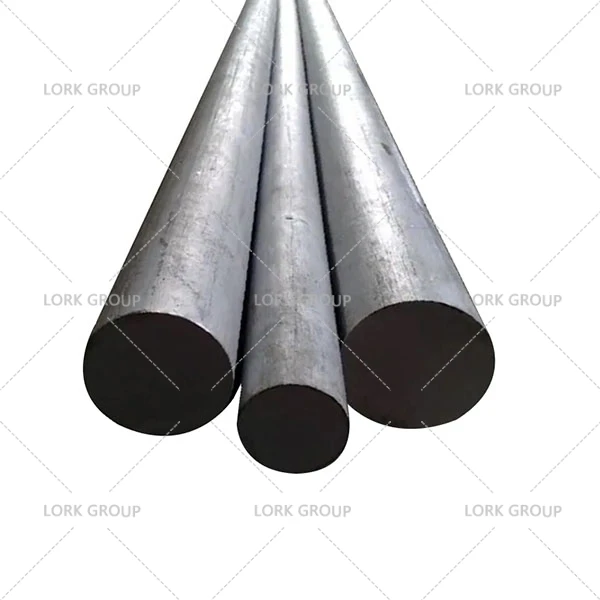
Monel 400 Bars are commonly used in marine and chemical processing applications. The tolerance requirements for Monel 400 Bars are designed to ensure good corrosion resistance and mechanical properties. While there may be some overlap with Inconel 718 bars in terms of diameter and length tolerances, the surface finish tolerance for Monel 400 Bars may be adjusted to prevent the formation of crevice corrosion in marine environments.
Ensuring Quality through Tolerance Control
As a supplier of Inconel 718 bars, we understand the importance of tolerance control in ensuring the quality of our products. We have a comprehensive quality management system in place that covers every aspect of the manufacturing process, from raw material inspection to final product testing.
Our quality control team conducts regular inspections and tests to verify that the Inconel 718 bars meet the specified tolerance requirements. We also work closely with our customers to understand their specific needs and provide customized solutions. By maintaining strict tolerance control, we can offer our customers high - quality Inconel 718 bars that are reliable, durable, and perform well in their intended applications.
Contact Us for Procurement
If you are in need of high - quality Inconel 718 bars that meet strict tolerance requirements, we are here to help. Our team of experts can provide you with detailed information about our products and assist you in selecting the right bars for your application. We are committed to providing excellent customer service and ensuring that you get the best value for your investment. Contact us today to start a procurement discussion and take advantage of our expertise in supplying Inconel 718 bars.
References
- ASME Boiler and Pressure Vessel Code, Section II, Part A - Ferrous Material Specifications
- ASTM International Standards for Nickel - Base Alloys
- Aerospace Industry Standards for High - Performance Alloys
Send Inquiry