




Stellite 12 Cobalt Alloy Bar
Welcome to Lork Group, your specialty metals manufacturer and exporter.
Stellite 12 (UNS R30012, AWS ERCoCr-B) is a cobalt-based wear-resistant alloy; it utilizes a cobalt matrix reinforced by the addition of chromium, tungsten, and carbon.
Among the Stellite alloy series, grades 6, 6B, 12, 21, and 30 are our best-sellers. Fundamentally, the distinction between Stellite 6 and Stellite 12 lies in their carbon content. Stellite 6 contains approximately 1% carbon, yielding a hardness of HRC 38–43; Stellite 12 contains around 1.4% carbon, driving its hardness up to the range of HRC 45–51. While increased hardness translates to superior wear resistance, it also results in greater brittleness. The choice between the two depends on the specific operating conditions: opt for Stellite 6 in environments involving high impact, and Stellite 12 for applications characterized by pure abrasive wear.
Its typical applications include high-temperature and high-pressure valve seating surfaces, internal combustion engine valve seats, bearing sleeves, industrial shear blades, saw tips, hot-rolling rolls, pump blades, and glass molds.
Core Features
The properties of Stellite 12 listed below are intended to assist you in material selection:
1. Carbides-The "Skeleton" of Wear Resistance
This material exhibits wear resistance not because of its overall bulk hardness, but rather due to the presence of carbide particles embedded within it. During abrasion, it is these hard particles-not the surrounding matrix-that bear the brunt of the wear.
2. Tungsten (7.5–9.5%)-The Guarantee of High-Temperature Strength
3. Chromium (27–32%)-The "Shield" Against Corrosion
4. Near-Eutectic Structure-The Point of Balanced Performance
Our logic for material selection can be summarized. For applications involving high impact and a need for toughness, choose Grade 6; for pure abrasive wear under high-temperature conditions, choose Grade 12; and for maximum hardness and wear resistance-where impact loading is absent-choose Grade 1.
chemical composition
| Element | Content Range |
| Co | Remaining (~59–62%) |
| Cr | 27-32% |
| W | 7.5-9.5% |
| C | 1.4-2.0% |
| Ni | ≤3.0% |
| Fe | ≤3.0% |
| Si | ≤2.0% |
| Mn | ≤1.0% |
Mechanical Properties
| Performance Parameters | Typical Value |
| Hardness (As-cast) | 45-51 HRC (435-590 HV) |
| High-temperature Hardness (540°C) | ~320 HV |
| High-temperature Hardness (650°C) | ~260 HV |
| High-temperature Hardness (760°C) | ~210 HV |
| Compressive Strength (Room Temperature) | 2000-2400 MPa |
| Elastic Modulus | 220-230 GPa |
Experience Sharing: Stellite 12 possesses very low tensile strength and is, by nature, a brittle material. Its unnotched impact toughness is merely 5–10 J/cm², making it unsuitable for applications involving severe impact. When sourcing this material, it is imperative to verify with the client: "Does your operating environment involve any impact? If so, we recommend considering Grade 6 instead."
Pitfall Warnings
- Verify the Grade (No. 6 vs. No. 12): While their appearances are similar, their chemical compositions differ significantly. Grade 12 features higher tungsten and carbon content, resulting in greater hardness.
- Verify the Hardfacing Procedure: If you intend to perform the welding yourself after purchasing the material, it is imperative to maintain a preheating temperature of at least 300°C. We have encountered instances where customers reported material spoilage due to insufficient preheating temperatures; please feel free to contact us-we would be happy to assist you in avoiding such losses.
- Verify the Operating Temperature: Stellite 12 is suitable for service conditions below 700°C. Its performance will begin to degrade at temperatures exceeding 800°C.
- Verify the Presence of Impact Loads: Stellite 12 is characterized by its high brittleness; if the application involves impact loading, you should instead consider using Grade 6 or Grade 21.
Key Points for Technical Communication
The customer base for Stellite 12 is primarily concentrated in sectors such as valve manufacturing, petrochemicals, mechanical processing, and glass molding-specifically in operating environments characterized by high temperatures and severe abrasion, but minimal impact.
1. We supply Stellite 12 in the following common product forms:
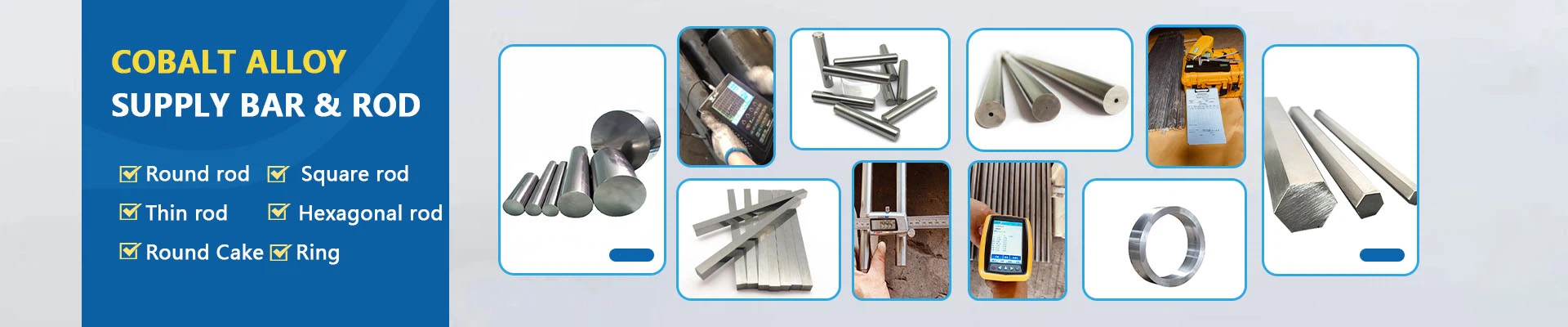
Cast Rods: Used for oxy-acetylene hardfacing and Gas Tungsten Arc Welding (GTAW/TIG).
Welding Wire: Used for TIG/MIG hardfacing.
Castings: Wear-resistant components ready for direct use (e.g., valve seats, sleeves).
2. When purchasing cast rods, the following points should be clearly agreed upon:
Diameter: Common sizes include 3.2mm, 4.0mm, 4.8mm; are other diameters required?
Length: Typically, lengths exceeding 50mm are standard; lengths of 50mm or less may require custom production.
Minimum Order Quantity (MOQ): 50kg; for orders below this weight, pricing will be quoted on a case-by-case basis.
Hardfacing Process: Oxy-acetylene or TIG? Different processes impose different requirements on the rod material.

Related cobalt Bar Products


Hot Tags: Stellite 12, cobalt alloy, China Stellite 12 Cobalt Alloy Bar manufacturers, factory
You Might Also Like


Send Inquiry