

What is the impact toughness of Monel 400 Bars?
Aug 04, 2025
Leave a message
Impact toughness is a crucial mechanical property that measures a material's ability to absorb energy and deform plastically before fracturing under impact loading. When it comes to Monel 400 Bars, understanding its impact toughness is essential for applications where sudden loading or shock is expected. As a supplier of Monel 400 Bars, I have witnessed firsthand the significance of this property in various industries.
Composition and General Properties of Monel 400 Bars
Monel 400 is a nickel - copper alloy that typically contains about 63% nickel and 28 - 34% copper, along with small amounts of iron, manganese, carbon, and silicon. This alloy offers excellent corrosion resistance in a wide range of environments, including seawater, hydrofluoric acid, and alkaline solutions. It also has good mechanical properties at both room and elevated temperatures, making it suitable for diverse applications.
The general mechanical properties of Monel 400 Bars, such as tensile strength, yield strength, and elongation, are well - known. However, impact toughness provides additional insights into how the material will behave under dynamic loading conditions.
Factors Affecting the Impact Toughness of Monel 400 Bars
1. Temperature
Temperature has a significant influence on the impact toughness of Monel 400 Bars. At lower temperatures, the material becomes more brittle, and its ability to absorb energy decreases. This is because the mobility of dislocations, which are responsible for plastic deformation, is restricted at low temperatures. On the other hand, at elevated temperatures, the material becomes more ductile, and its impact toughness increases.
For example, in cryogenic applications where temperatures can reach extremely low levels, the impact toughness of Monel 400 Bars needs to be carefully evaluated. Special heat treatment processes may be required to improve its low - temperature impact resistance.
2. Microstructure
The microstructure of Monel 400 Bars plays a vital role in determining its impact toughness. A fine - grained microstructure generally exhibits better impact toughness compared to a coarse - grained one. This is because fine grains provide more obstacles to crack propagation.
During the manufacturing process of Monel 400 Bars, proper control of the cooling rate and heat treatment can help achieve a desirable microstructure. For instance, controlled rolling and annealing can refine the grain size and enhance the impact toughness of the bars.
3. Impurities and Inclusions
Impurities and inclusions in Monel 400 Bars can act as stress concentrators and initiate crack formation, thereby reducing the impact toughness. Elements such as sulfur, phosphorus, and non - metallic inclusions can have a detrimental effect on the material's ability to absorb energy under impact.
High - quality Monel 400 Bars are produced with strict control over the impurity content. Advanced refining techniques are used to minimize the presence of harmful elements and inclusions, ensuring good impact toughness.
Measuring the Impact Toughness of Monel 400 Bars
The most common method for measuring the impact toughness of materials is the Charpy impact test. In this test, a notched specimen of Monel 400 Bar is struck by a pendulum hammer, and the energy absorbed during the fracture is measured. The absorbed energy is an indication of the material's impact toughness.

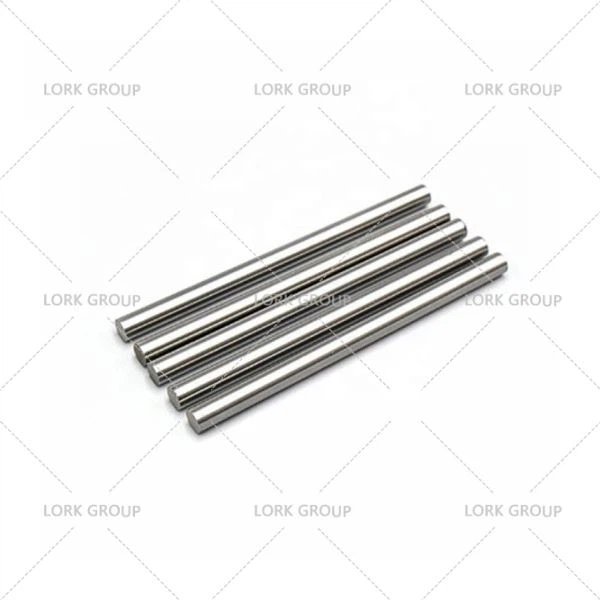
The Charpy test can be conducted at different temperatures to evaluate the temperature - dependent impact toughness of Monel 400 Bars. The results are usually presented in terms of the absorbed energy (in joules) at a specific temperature.
Applications of Monel 400 Bars Based on Impact Toughness
1. Marine Applications
In the marine industry, Monel 400 Bars are widely used due to their excellent corrosion resistance in seawater. The impact toughness of these bars is crucial in applications such as shipbuilding, offshore platforms, and marine valves. These structures are often exposed to dynamic loading from waves, collisions, and other external forces.
For example, in the construction of ship hulls, Monel 400 Bars with good impact toughness can withstand the impact of waves and potential collisions with floating objects, ensuring the safety and integrity of the ship.
2. Chemical Processing Industry
In chemical processing plants, Monel 400 Bars are used in equipment that handles corrosive chemicals. The impact toughness of the bars is important in cases where sudden pressure changes or mechanical shocks may occur.
For instance, in the manufacturing of reaction vessels and piping systems, Monel 400 Bars with high impact toughness can prevent catastrophic failures due to unexpected impacts or pressure surges.
Comparison with Other Nickel - Based Alloys
When considering Monel 400 Bars, it is also useful to compare its impact toughness with other nickel - based alloys. For example, Monel 502 Bar and Monel K500 Bars have different compositions and mechanical properties.
Monel K500 Bars, which are age - hardenable, generally have higher strength compared to Monel 400 Bars. However, the impact toughness of Monel 400 Bars may be more suitable for applications where a balance between corrosion resistance and impact resistance is required.
Another alloy, AMS 5844 MP35N, is known for its high strength and excellent corrosion resistance. While it may have different impact toughness characteristics compared to Monel 400 Bars, the choice between them depends on the specific application requirements.
Ensuring High - Quality Monel 400 Bars with Good Impact Toughness
As a supplier of Monel 400 Bars, we take several measures to ensure that our products have high impact toughness.
First, we source high - purity raw materials to minimize the presence of impurities and inclusions. Our manufacturing process is carefully controlled to achieve the desired microstructure and mechanical properties. We conduct strict quality control tests, including Charpy impact tests, on every batch of Monel 400 Bars to ensure that they meet the required standards.
We also offer customized heat treatment services to improve the impact toughness of Monel 400 Bars according to the specific needs of our customers. Whether it is for low - temperature applications or high - stress environments, we can provide solutions to enhance the performance of our bars.
Conclusion
The impact toughness of Monel 400 Bars is a critical property that affects its performance in various applications. Factors such as temperature, microstructure, and impurities have a significant influence on the impact toughness. By understanding these factors and conducting proper testing, we can ensure that the Monel 400 Bars we supply meet the high - quality standards required by our customers.
If you are in need of Monel 400 Bars for your project and want to discuss the impact toughness requirements, please feel free to contact us. We are dedicated to providing you with the best - suited Monel 400 Bars and professional technical support.
References
- ASM Handbook, Volume 1: Properties and Selection: Irons, Steels, and High - Performance Alloys
- Nickel - Based Alloys: Properties, Processing, and Applications by John R. Davis
- ASTM Standards related to impact testing of metallic materials
Send Inquiry