

What is the history of AISI 321 Bar?
Dec 23, 2025
Leave a message
Hey there! As a supplier of AISI 321 Bar, I'm super excited to take you on a journey through its history. So, let's dive right in!
Early Beginnings of Stainless Steel
To understand the history of AISI 321 Bar, we first need to look at the broader context of stainless steel. Stainless steel was discovered in the early 20th century. In 1913, Harry Brearley, a British metallurgist, accidentally found that adding chromium to steel made it resistant to rust. This was a game - changer in the world of metals. The basic concept of stainless steel was born out of the need for a material that could withstand corrosion, especially in harsh environments.
Development of AISI 321
AISI 321 is part of the austenitic stainless - steel family. The American Iron and Steel Institute (AISI) came up with a system to standardize the naming of different types of steels. AISI 321 was developed to meet specific industrial requirements. It's an alloy that contains chromium, nickel, and titanium. The addition of titanium is what sets it apart from some other austenitic stainless steels.
Titanium plays a crucial role in AISI 321. When stainless steel is heated, it can form chromium carbides at the grain boundaries. This process, known as sensitization, can reduce the steel's corrosion resistance. But in AISI 321, the titanium reacts with the carbon in the steel before the chromium does. This prevents the formation of chromium carbides and helps maintain the steel's corrosion resistance, even after being exposed to high temperatures.
Industrial Applications in the Early Days
In the early days, AISI 321 Bar found its way into various industries. One of the first major applications was in the aerospace industry. The aerospace sector needed materials that could withstand high temperatures and corrosive environments. AISI 321 Bar was perfect for components like exhaust manifolds, jet engine parts, and other high - temperature applications. Its ability to resist corrosion and maintain its strength at elevated temperatures made it a top choice.

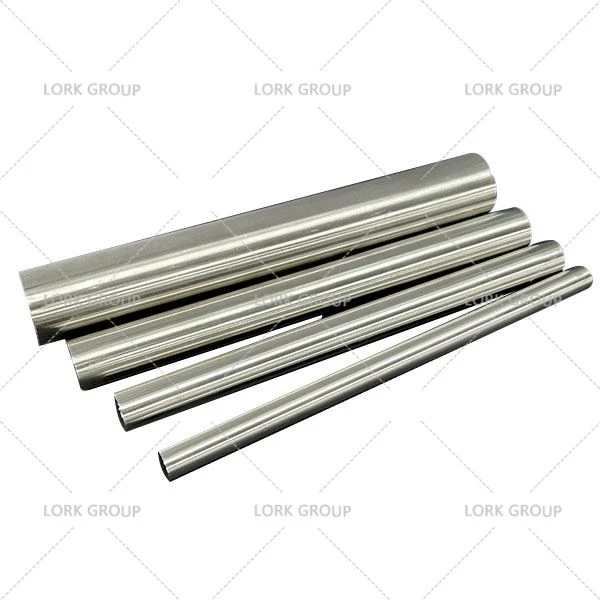
The chemical processing industry also started using AISI 321 Bar. In chemical plants, there are often corrosive chemicals and high - temperature processes. AISI 321's corrosion resistance and high - temperature stability made it suitable for pipes, valves, and other equipment used in these plants.
Evolution Over the Years
As technology advanced, the demand for AISI 321 Bar grew. Manufacturers started improving the production processes to make the bars more consistent in quality. They also developed new ways to shape and machine AISI 321 Bar to meet different customer needs.
In the 1960s and 1970s, with the growth of the petrochemical industry, the demand for AISI 321 Bar skyrocketed. Petrochemical plants require materials that can handle high - pressure, high - temperature, and corrosive conditions. AISI 321 Bar was used in everything from refinery equipment to offshore drilling platforms.
Comparison with Other Bars
Now, let's talk about how AISI 321 Bar stacks up against some other bars. For example, the UNS S32750 Duplex Bar and UNS S32760 Duplex Bar. These duplex bars have a different microstructure compared to AISI 321. Duplex steels have a combination of austenite and ferrite phases, which gives them high strength and good corrosion resistance.
However, AISI 321 Bar has its own advantages. It's more weldable than some duplex steels. Welding can be a critical process in many industrial applications, and AISI 321's good weldability makes it easier to fabricate complex structures. Also, AISI 321 is often more cost - effective for certain applications where the extreme strength of duplex steels isn't necessary.
Modern - Day Applications
Today, AISI 321 Bar is used in a wide range of industries. In the food processing industry, it's used for equipment like conveyor belts, mixing tanks, and storage containers. Its corrosion resistance ensures that it won't contaminate the food products, and its high - temperature stability allows it to withstand the cleaning and sterilization processes.
The automotive industry also uses AISI 321 Bar. It can be found in exhaust systems, where it needs to resist the high temperatures and corrosive gases produced by the engine.
Our Role as a Supplier
As a supplier of AISI 321 Bar, we understand the importance of quality. We source our AISI 321 Bar from reliable manufacturers who follow strict quality control measures. We offer a wide range of sizes and specifications to meet the diverse needs of our customers.
Whether you're in the aerospace, chemical processing, food processing, or automotive industry, we can provide you with the right AISI 321 Bar for your application. We also have a team of experts who can help you choose the best product based on your specific requirements.
Why Choose AISI 321 Bar?
There are several reasons why you might want to choose AISI 321 Bar. First, its corrosion resistance is excellent. This means that your equipment will last longer and require less maintenance. Second, its high - temperature stability makes it suitable for applications where the temperature can get quite high. Third, its good weldability allows for easy fabrication, which can save you time and money during the manufacturing process.
Contact Us for Your AISI 321 Bar Needs
If you're in the market for AISI 321 Bar, we'd love to hear from you. Whether you have a small project or a large - scale industrial application, we can provide you with the right product at a competitive price. Don't hesitate to reach out to us to discuss your requirements and get a quote. We're here to help you find the best solution for your business.
References
- ASM Handbook Committee. (2004). ASM Handbook Volume 13A: Corrosion: Fundamentals, Testing, and Protection. ASM International.
- Davis, J. R. (Ed.). (1994). Stainless Steels. ASM International.
Send Inquiry